 Official Government Website
Author: Tanya Harris
Teacher’s vision brews a future filled with opportunity for her students
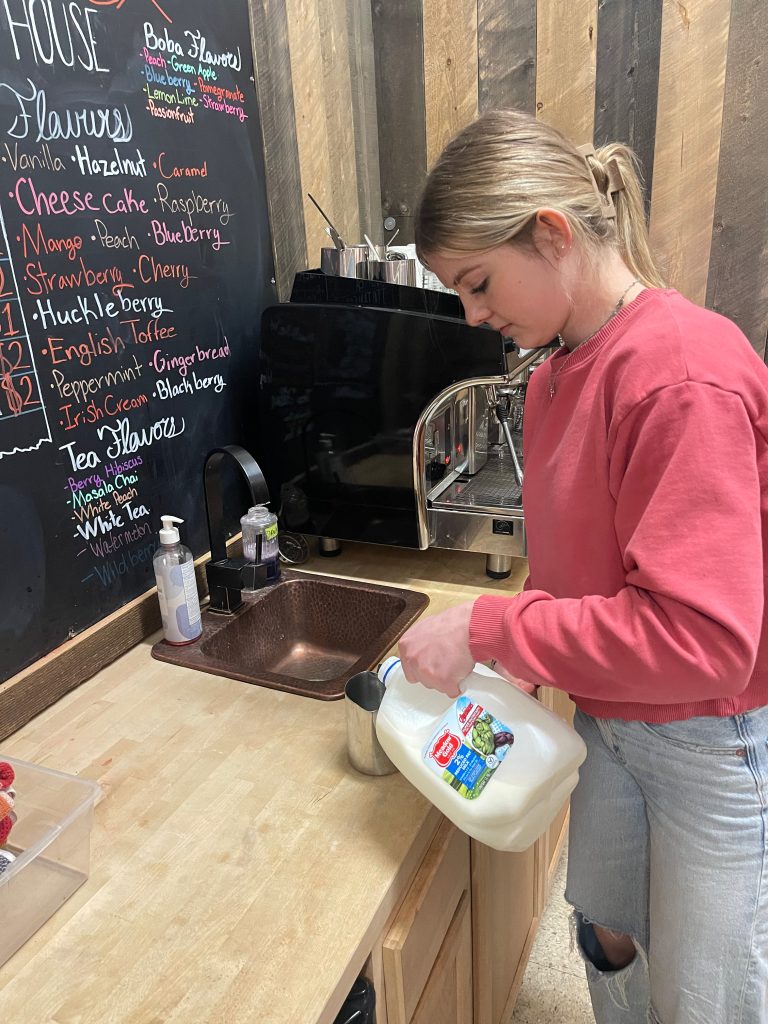
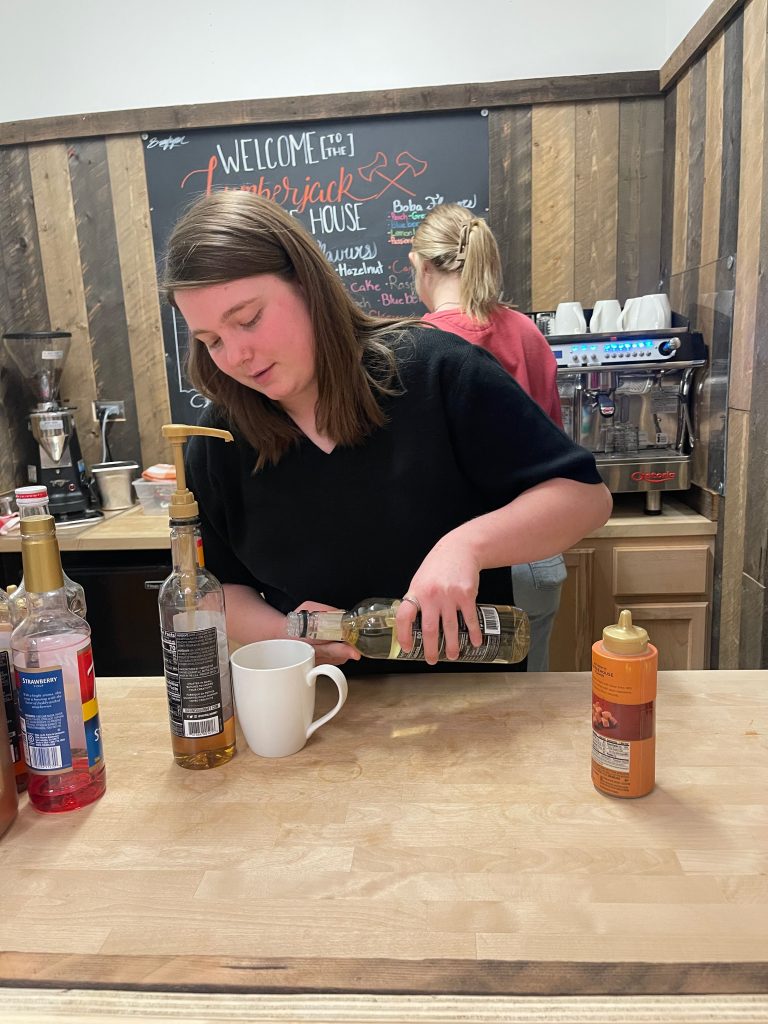
With just 70 students in grades nine through 12, Council High School (CHS) may be small, but its FCSHS teacher, Jodi Cook, has big ambitions. Since 1992, Cook has been inspiring students with her passion for culinary arts, which took root during her own junior high experience. Her involvement in Future Homemakers of America (now FCCLA) and national culinary competitions in high school further fueled her desire to teach FCSHS.
Three years ago, Cook envisioned a student-run coffee shop to enhance her culinary arts program. This dream became a reality when the school remodeled its library, transforming a small closet into Jack’s Coffee Shop, named after the school’s mascot, the Lumberjacks. A Program Quality Initiative (PQI) grant provided the funding for the necessary commercial equipment, allowing Cook’s initiative to come to life.
The coffee shop offers students the chance to earn valuable certifications for careers in the food service industry. All students earn an online barista certification and the Idaho-specific Ready, Set, Food Safe Certification. Some even earn the ServSafe Manager Certification, which demonstrates advanced knowledge in food safety and sanitation.
“Running the coffee shop helps students develop essential skills,” said Cook. “They build teamwork and a strong work ethic as they manage daily operations, research drink trends, and adapt to customer preferences.”
I check in with them occasionally, but the coffee shop is entirely student-run and self-sustaining.
Jodi Cook, FCSHS teacher
Jack’s Coffee Shop operates on weekdays from 7:30 to 8 a.m. Monday through Thursday, allowing students to manage it independently before classes. Students also run the coffee shop on Wednesdays during lunch. Students take pride in crafting seasonal menus and special drinks, such as the Lumberjack Special for homecoming. Recently, they introduced boba tea and nondairy alternatives based on customer feedback, displaying their ability to research and innovate.
Beyond coffee-making, the initiative teaches crucial skills in entrepreneurship, marketing and customer service. Students create drink menus, conduct surveys to understand customer needs, design promotional materials, manage inventory and handle transactions.
“I check in with them occasionally, but the coffee shop is entirely student-run and self-sustaining,” said Cook.
The practical experience gained from managing the coffee shop has enabled many students to successfully transition into jobs at local restaurants and coffee shops, including positions in nearby McCall. This initiative not only enhances their culinary knowledge but also equips them with essential workplace skills, fostering pride and a sense of community within the school.
“I wanted my students to learn how to be baristas because coffee shops are very popular,” said Cook. “This hands-on training provides them with skills they can use when they graduate. If they go to college, they could easily step right into a coffee shop, earn some money and do something positive and fun.”
CTE programs transform futures for incarcerated youth

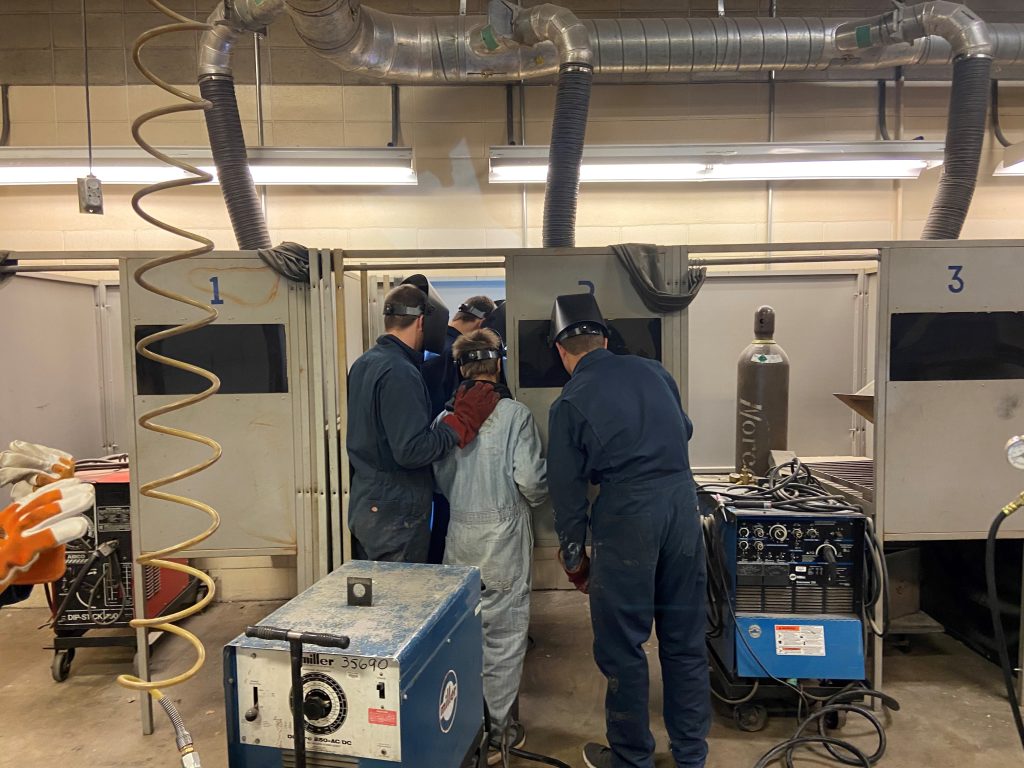
Since 2020, LCSC has collaborated with the Idaho Department of Juvenile Corrections (IDJC) to expand access to CTE programs for its residents. This initiative provides hands-on learning opportunities that can lead to real-world skills and better outcomes for incarcerated youth.
“Many of these students previously believed that education was not an option for them,” said Liz Weldy, a transition coordinator at LCSC. “Now, they’re earning dual credit or college credit, which opens doors they didn’t know were possible.”
The program began when IDJC reached out to LCSC to discuss developing more CTE opportunities for its residents. Initial discussions revealed significant barriers. Many academic institutions declined to participate due to these challenges, but LCSC was determined to find a solution.
“Incarcerated students face strict safety protocols; they can’t communicate with anyone outside their facility except for parents during visits,” said Weldy. “That means a traditional online classroom wouldn’t work.”
LCSC developed a secure instance of the online learning platform Canvas, customizing it to lock down certain features to meet safety requirements. This approach allows students to access course materials while adhering to the necessary restrictions.
Education reduces recidivism rates, and we hope to see our efforts reflected in lower incarceration rates in the future.
Liz Weldy, transition coordinator, LCSC
Initially, LCSC offered courses in hospitality, basic electricity and heating, ventilation and air conditioning (HVAC) principles. A key feature of CTE classes is their hands-on nature, and classrooms often contain professional-grade equipment. To ensure students still had access to applied learning, Weldy had to get creative with the resources available at IDJC’s three facilities. For example, at the St. Anthony facility, students gain hands-on experience working in the Canteen, an onsite restaurant for the facility’s staff. They can also earn internship credits, aligning their practical experience with industry standards.
“They’re managing real-world tasks, from food preparation to customer service, which builds essential soft skills,” said Weldy.
The program also emphasizes support during students’ transitions back into society. Each student receives an admission letter upon enrolling, along with a CTE T-shirt to foster pride.
Looking ahead, Weldy envisions further program growth.
“We’re actively seeking grant opportunities to expand offerings like welding and other trades,” said Weldy. “The goal is to align our programs with workforce needs in the community.”
The impact of these programs is already evident.
“We’ve seen students who previously disengaged from education start to thrive,” said Weldy. “One student wrote to his parents, saying, ‘Getting my high school diploma at 16 instead of a GED was a huge accomplishment and before taking these college courses, I had decided that was good enough for me. Now, I want to pursue more! And I’m excited about doing so.’”
Feedback from educators indicates a strong demand for more CTE classes. In response, LCSC is exploring additional course offerings and certifications.
“Educators see how these programs positively influence student behavior and academic performance, and there’s interest in expanding into healthcare and science fields,” said Weldy. “Education reduces recidivism rates, and we hope to see our efforts reflected in lower incarceration rates in the future.”
BPA national champion pursues a career in education

In 2022, Sandpoint High School graduate Colton Moore embarked on an unexpected journey that would reshape his future. As the editor of his yearbook, he learned how to use industry-standard software like the Adobe Creative Suite. Although he had dabbled in photography and graphic design, business education wasn’t initially on his radar. That changed when his school’s CTE teacher and Business Professionals of America (BPA) advisor, Melinda Nieman, encouraged him to join BPA and compete in the statewide Desktop Publishing competition during his senior year.
“As a student, I was always striving for the best and focused on achieving the highest grades, whether in AP classes or yearbook. I think that mindset made me hesitant to join BPA,” said Moore. “I worried I might not meet my own high standards in the competitive setting.”
Despite his initial reservations, Moore quickly discovered that he had nothing to fear. That year, he took first place in the Desktop Publishing competition at the BPA National Leadership Conference (NLC) in Dallas. His experience at the state and national levels opened his eyes to the potential for learning and connecting with like-minded individuals.
“I realized it was about engaging with others, learning together, and sharing experiences, not just competing,” said Moore.
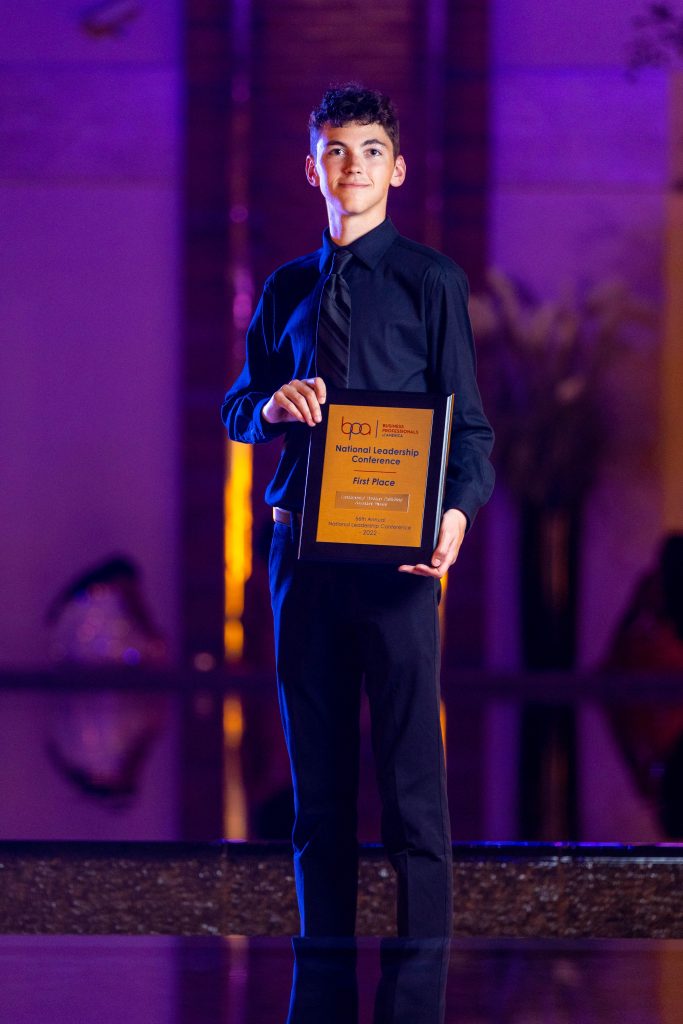
This realization was pivotal in changing his trajectory. Initially aiming to become a creative director in the business world, Moore shifted his focus to pursuing a degree in business teacher education after witnessing the value of collaboration and mentorship.
Following graduation, Moore began his academic journey at North Idaho College (NIC), where he engaged deeply with the campus community as a college ambassador. He appreciated the small class sizes and interactive learning environment, realizing through this experience the unique strengths of community colleges. After earning his associate degree, Moore transferred to the University of Idaho, where he is now a junior completing a bachelor’s degree in business and marketing education. He currently serves as the president of the University of Idaho’s postsecondary BPA chapter and plays an active role in organizing the region’s high school BPA event held on campus.
Students need these skills to succeed in both personal relationships and professional settings, particularly for those aspiring to leadership roles in business and marketing.
Colton Moore,
business and marketing education major, University of Idaho
In addition to his academic pursuits, Moore is already making strides in his professional journey by securing a paid internship with CharacterStrong, a Tacoma-based company that develops character education content for schools.
“In CTE, soft skills, such as conflict resolution and responsibility, are as important as technical skills,” said Moore. “Students need these skills to succeed in both personal relationships and professional settings, particularly for those aspiring to leadership roles in business and marketing.”
Moore credits several mentors for shaping his educational journey. Although he didn’t take a formal class with Nieman, her passion for teaching and encouragement sparked his interest in the field.
“Kevin Hutchins, my yearbook advisor for two years, was also a mentor throughout high school,” said Moore. “We had many great discussions about business, marketing and education, which inspired me to become a business teacher.”
Moore hopes to inspire future students in the same way his mentors inspired him.
“I can’t wait to bring these experiences and teaching methods into my classroom,” said Moore.
Support from Center for New Directions fuels growth in autobody program

In the bustling Autobody and Paint Technology workshop of NIC’s Parker Technical Education Center (PTEC), the sound of tools clanging and paint sprayers humming fills the air. Students work diligently at their stations, some meticulously prepping surfaces while others apply vibrant coats of paint. This dynamic environment reflects a growing trend: Among the 13 students enrolled, seven are female, marking the first time in the program’s history that women make up more than half of the class.
Part of this increase in women enrolling in nontraditional occupations is related to outreach and support for NIC’s Center for New Directions (CND), which offers essential support for single parents and displaced homemakers, as well as students going into fields traditionally held by the opposite gender.
For student Rylea Johnson, enrolling in the Autobody and Paint Technology Program was an easy next step after graduation from high school.
“I’ve always loved working with my hands,” said Johnson. “My favorite part of the program so far is the metal bodywork aspect. It’s cool to see the transformation of a vehicle from really messed up to almost perfect.”
Andy Rogge, the program’s lead instructor, thinks females becoming increasingly interested in the trades is a good thing.
“These students are great at listening to direction and also tend to be pickier on their quality of work, and that is exactly what I want to see with students as they are learning the basics of this industry,” said Rogge.
My favorite part of the program so far is the metal bodywork aspect. It’s cool to see the transformation of a vehicle from really messed up to almost perfect.
Rylea Johnson, student, NIC
To further encourage women to pursue careers in trades, the CND holds a monthly meeting called Women Wednesday, a gathering designed to create a supportive network for female students at PTEC.
“Our first Women Wednesday was so well-attended that we didn’t have enough chairs,” said Louisa Rogers, program coordinator for the CND. “It’s amazing to see so many women come together to support each other.”
Johnson acknowledges her experience is different than the other female students at PTEC.
“At Women Wednesday, they were talking about how some of them are the only female students in their program,” said Johnson. “I think it’s unusual for there to be so many girls in our program. But we all get along so well. And the guys in our program are really great and supportive. We all joke around and help each other out.”
The program shares space with the Kootenai Technical Education Center (KTEC), allowing high school students to witness advanced work firsthand. Three of the seven female students were previously KTEC students. The growing female presence in the program reflects a broader movement towards inclusivity in the trades.
“We want to show women that they belong in these fields,” said Rogers. “It’s about breaking down barriers and building confidence.”
Career technical centers celebrate 25 year milestone anniversary
2024 marks the 25th anniversary of career technical centers (CTCs) in Idaho, highlighting their evolution and significant impact on CTE in the state. Pursuant to Idaho Code § 33-1002G and IDAPA 55.01.03.102, LEAs and cooperative service agencies must meet several criteria to qualify as a CTC. They must operate separately from other schools, have dedicated administration, offer state-of-the-art programs that prepare high school students for in-demand occupations and include opportunities to earn postsecondary credit. CTCs must also adhere to state standards, undergo a year-long planning process before opening and partner with local industries to ensure their programs remain relevant.
When CTCs were established in the 1998-1999 school year, the CTE landscape was quite different. Initially referred to as career technical schools, this framework encouraged educational programs to collaborate and share resources to enhance CTE offerings. Such partnerships facilitated the development of programs aligned with local industry demands, provided professional development for educators and strengthened connections between schools and businesses.
Each CTC has developed unique characteristics based on its location, administration and funding models. For example, the COSSA Regional Technology and Education Center in Wilder serves a regional population, transporting students from various districts to a central facility. In contrast, the Dennis Technical Education Center in Boise operates within a single district, providing local transportation for its students from high schools within the school district.
As CTCs celebrate this milestone, we reflect on their adaptability in response to evolving community needs. These centers have established themselves as vital components of Idaho’s educational landscape, preparing students for careers in a dynamic economy. The success of CTCs is evidenced by their innovation and the expansion of programs that meet the demands of current and emerging occupations.
Looking forward, CTCs will continue to play a pivotal role in providing meaningful pathways for students. Committed to delivering high-quality, state-of-the-art programs and services, these institutions will remain cornerstones of CTE, preparing future generations for success in an ever-evolving job market.


2019 Program Award Winners
Idaho Career & Technical Education Program Awards are designed to showcase the best-of-the-best in Idaho’s high school and technical college CTE programs. Program awards winners are listed here.
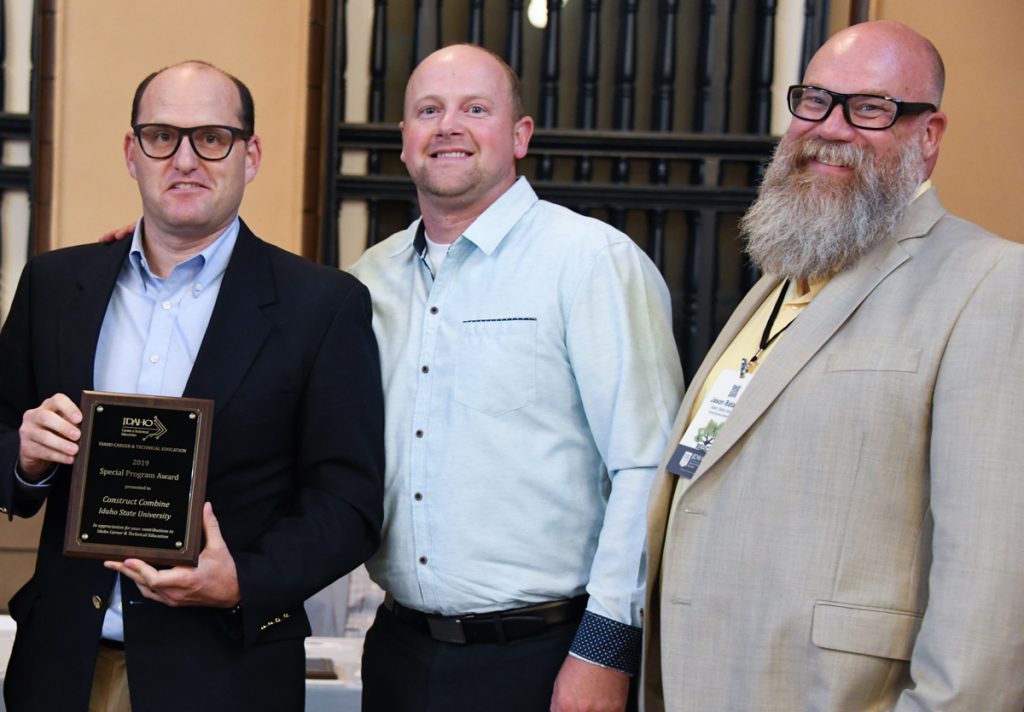
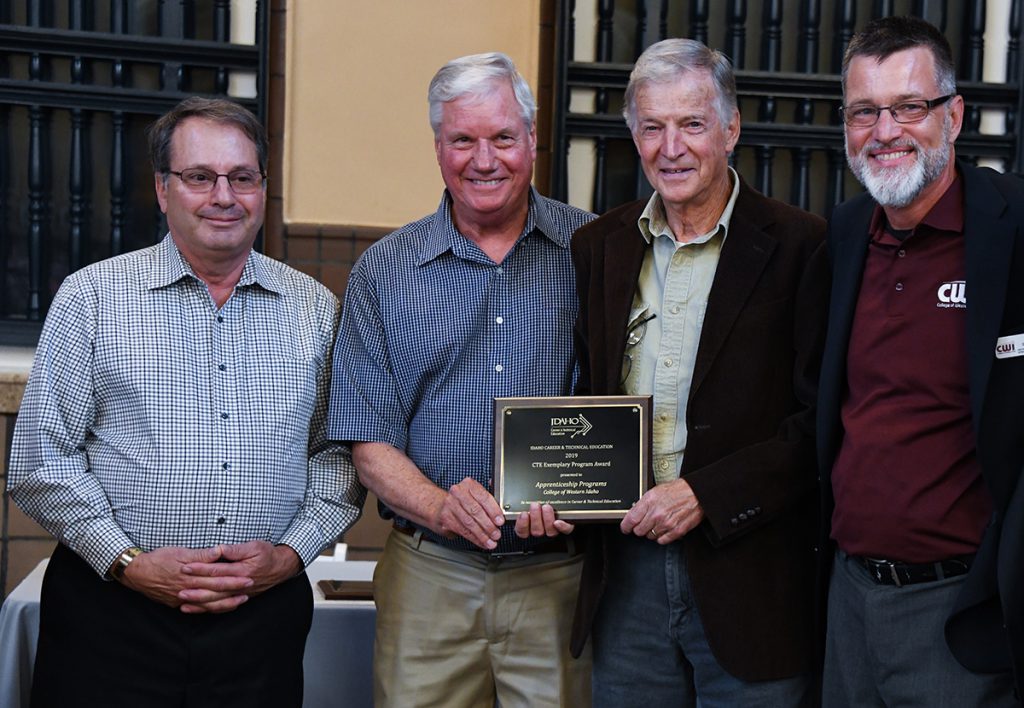
2019 Exemplary Postsecondary Program: Construct Combine Idaho State University 2019 Exemplary Postsecondary Program: Apprenticeship Programs College of Western Idaho
2019 Exemplary Postsecondary Program
Construct Combine, Idaho State University – Pocatello, Idaho
Pictured from left to right:
Scott Stephens, CEWT Lead for Construction Combine; Brad Landon, Store Manager at Home Depot in Pocatello; Jason Batalden CEWT Assistant Director
2019 Exemplary Postsecondary Program
Apprenticeship Programs, College of Western Idaho – Nampa, Idaho
Picture from left to right:
Steve Bennett, CWI Plumbing Apprenticeships Program Coordinator; Chris Miller, CWI HVAC Apprenticeships Program Coordinator (Retired); Jim Webb, CWI Electrical Apprenticeships Program Coordinator; Marc Swinney, CWI Workforce Development Director, Business & Manufacturing Programs
- Students blend trades and compassion at Elevate Academy EastWhen Elevate Academy East construction instructor John Kramer dreamed up a… Read more: Students blend trades and compassion at Elevate Academy East
- Nursing graduate finds support, success through Center for New DirectionsWhen Caitlyn Keelin walks the halls of Portneuf Medical Center’s progressive… Read more: Nursing graduate finds support, success through Center for New Directions
- Cosmetology class turns heads in DaytonWhen Lisa Barnard launched the cosmetology program at West Side High… Read more: Cosmetology class turns heads in Dayton
- Experience and passion drive growth in Salmon River’s ag programWhen James Boggan returned to Riggins in 2022, he thought he… Read more: Experience and passion drive growth in Salmon River’s ag program
- Graphic and Web Design program builds national reputation on real-world success“Different years, different students, same results.” That’s the unofficial motto of… Read more: Graphic and Web Design program builds national reputation on real-world success
2018 Program Award Winners
Idaho Career & Technical Education Program Awards are designed to showcase the best-of-the-best in Idaho’s high school and technical college CTE programs. Program awards winners are listed here.
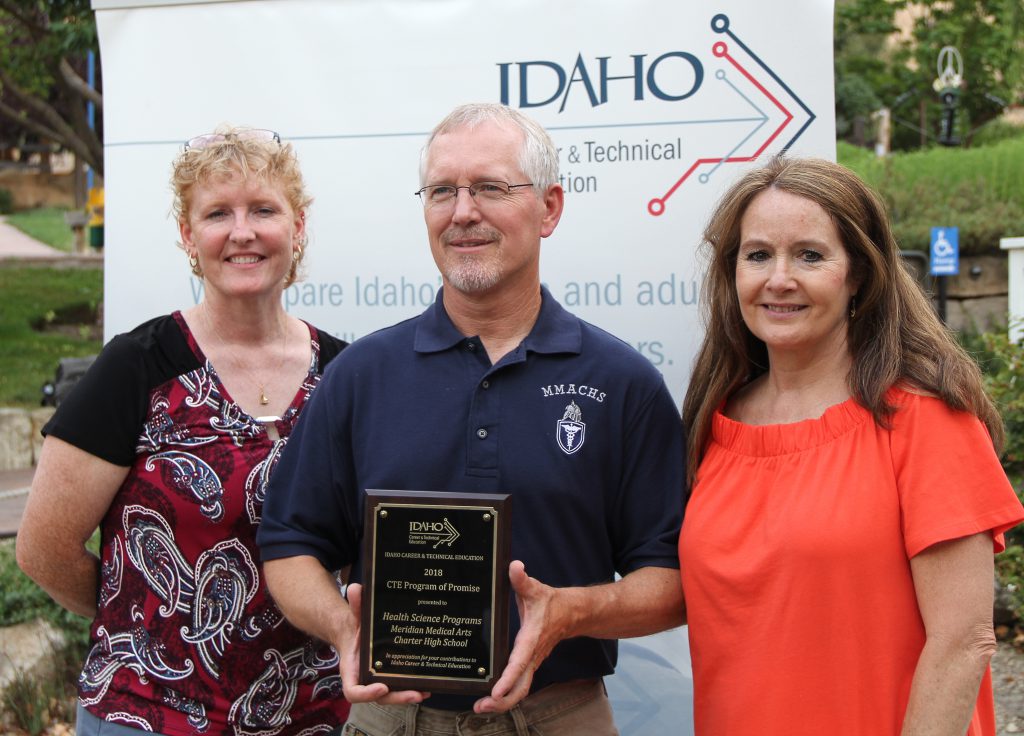
Program of Promise: Health Science Programs at Meridian Medical Arts Charter High School – Meridian, Idaho 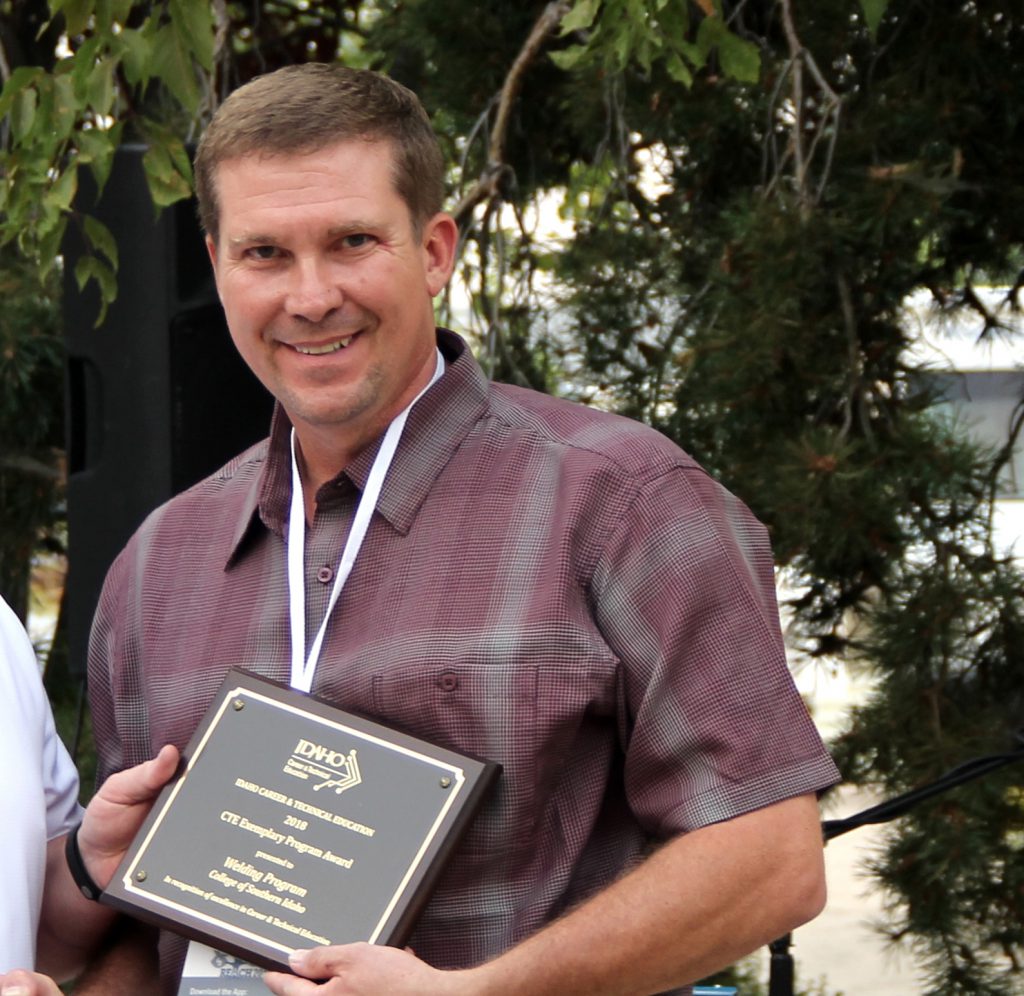
Exemplary Program: Welding Program at the College of Southern Idaho – Twin Falls, Idaho 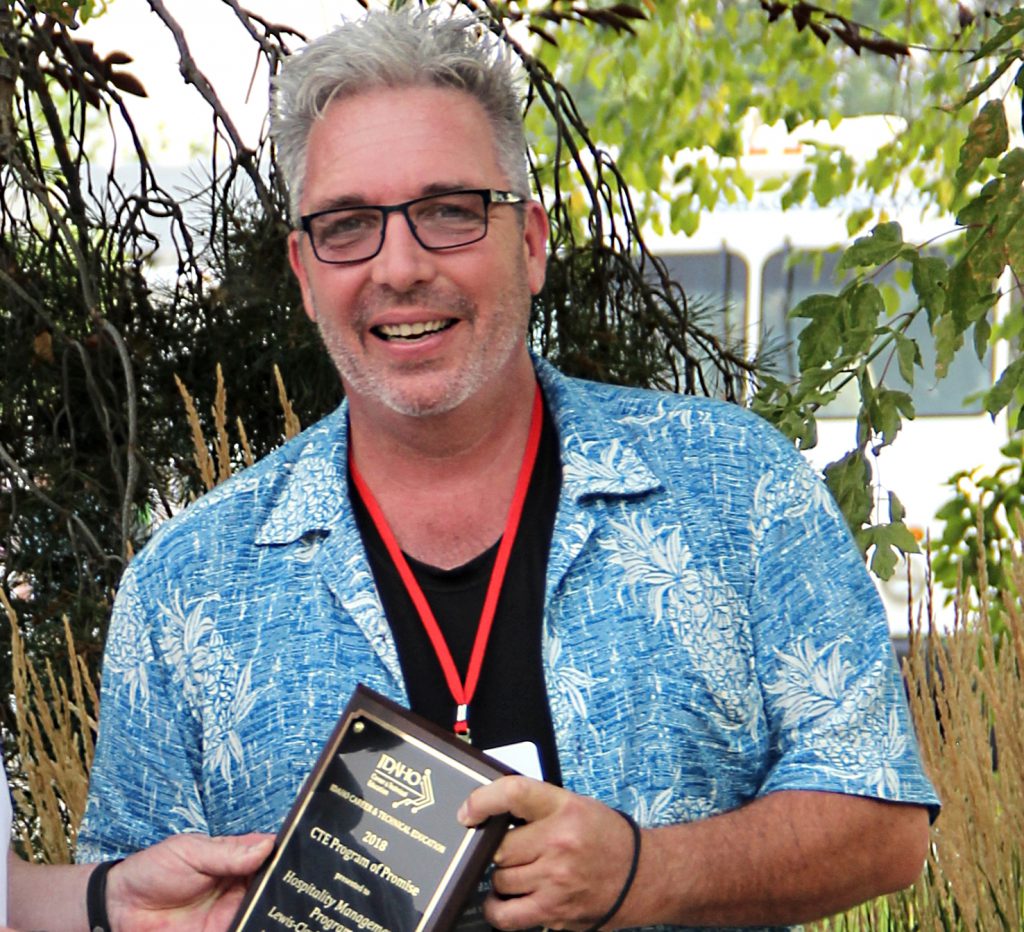
Program of Promise: Hospitality Management Program at Lewis-Clark State College – Lewiston, Idaho
- Students blend trades and compassion at Elevate Academy EastWhen Elevate Academy East construction instructor John Kramer dreamed up… Read more: Students blend trades and compassion at Elevate Academy East
- Nursing graduate finds support, success through Center for New DirectionsWhen Caitlyn Keelin walks the halls of Portneuf Medical Center’s… Read more: Nursing graduate finds support, success through Center for New Directions
- Cosmetology class turns heads in DaytonWhen Lisa Barnard launched the cosmetology program at West Side… Read more: Cosmetology class turns heads in Dayton
- Experience and passion drive growth in Salmon River’s ag programWhen James Boggan returned to Riggins in 2022, he thought… Read more: Experience and passion drive growth in Salmon River’s ag program
- Graphic and Web Design program builds national reputation on real-world success“Different years, different students, same results.” That’s the unofficial motto… Read more: Graphic and Web Design program builds national reputation on real-world success
2017 Program Award Winners
Idaho Career & Technical Education Program Awards are designed to showcase the best-of-the-best in Idaho’s high school and technical college CTE programs. Program awards winners are listed here.
2017 Exemplary Postsecondary Program: Medical Assistant at College of Southern Idaho, Twin Falls, Idaho 2017 Exemplary Secondary Program: Culinary Arts at West Ada CTE Center – Renaissance Campus, Meridian, Idaho
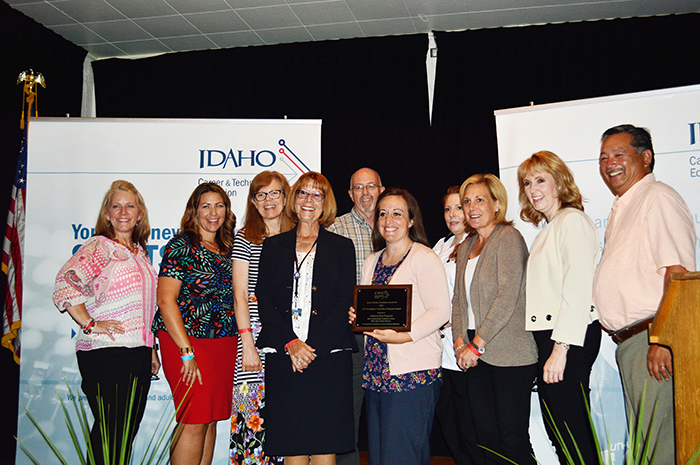
2017 Exemplary Secondary Program
Culinary Arts at West Ada CTE Center – Renaissance Campus, Meridian, Idaho
Pictured from left to right:
Dr. Angie Neal, CTE Coordinator; Amy Brown, Culinary Instructor Rocky Mountain High School (2016-17); Valerie Stringham, Culinary Instructor Centennial High School; Dr. Mary Ann Ranells, Superintendent, West Ada School District; Chef Vern Hickman, Culinary Instructor, Ada Career Technical Center; Chef Brooke Scoville, Culinary Instructor, Ada Career Technical Center; Chef Christine Bonocore, Front-of-the-House Instructor Ada Career Technical Center; Staci Low, Director Career Technical Education, West Ada School District; Dr. Shana Hawkins, Principal Renaissance High School; Mike Hirano, Principal, Rocky Mountain High School
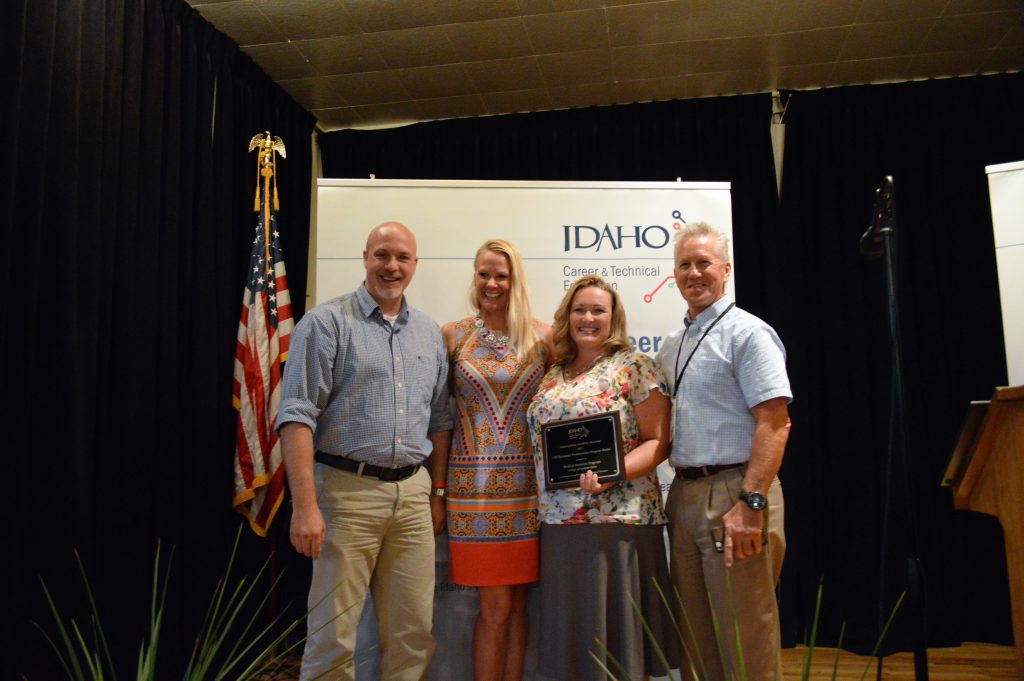
2017 Exemplary Postsecondary Program
Medical Assistant at College of Southern Idaho, Twin Falls, Idaho
Pictured from left to right:
Jayson Lloyd, College of Southern Idaho Instructional Dean Health Science and Human Service; Dr. RoseAnna Holliday, College of Southern Idaho Department Chair Health Science and Human Service; Kara Mahannah Associate Professor College of Southern Idaho Medical Assisting Program Manager; Terry Patterson College of Southern Idaho Instructional Dean & Academic Affairs
- Students blend trades and compassion at Elevate Academy EastWhen Elevate Academy East construction instructor John Kramer dreamed up… Read more: Students blend trades and compassion at Elevate Academy East
- Nursing graduate finds support, success through Center for New DirectionsWhen Caitlyn Keelin walks the halls of Portneuf Medical Center’s… Read more: Nursing graduate finds support, success through Center for New Directions
- Cosmetology class turns heads in DaytonWhen Lisa Barnard launched the cosmetology program at West Side… Read more: Cosmetology class turns heads in Dayton
- Experience and passion drive growth in Salmon River’s ag programWhen James Boggan returned to Riggins in 2022, he thought… Read more: Experience and passion drive growth in Salmon River’s ag program
- Graphic and Web Design program builds national reputation on real-world success“Different years, different students, same results.” That’s the unofficial motto… Read more: Graphic and Web Design program builds national reputation on real-world success
2016 Program Award Winners
Idaho Career & Technical Education Program Awards are designed to showcase the best-of-the-best in Idaho’s high school and technical college CTE programs. Program awards winners are listed here.
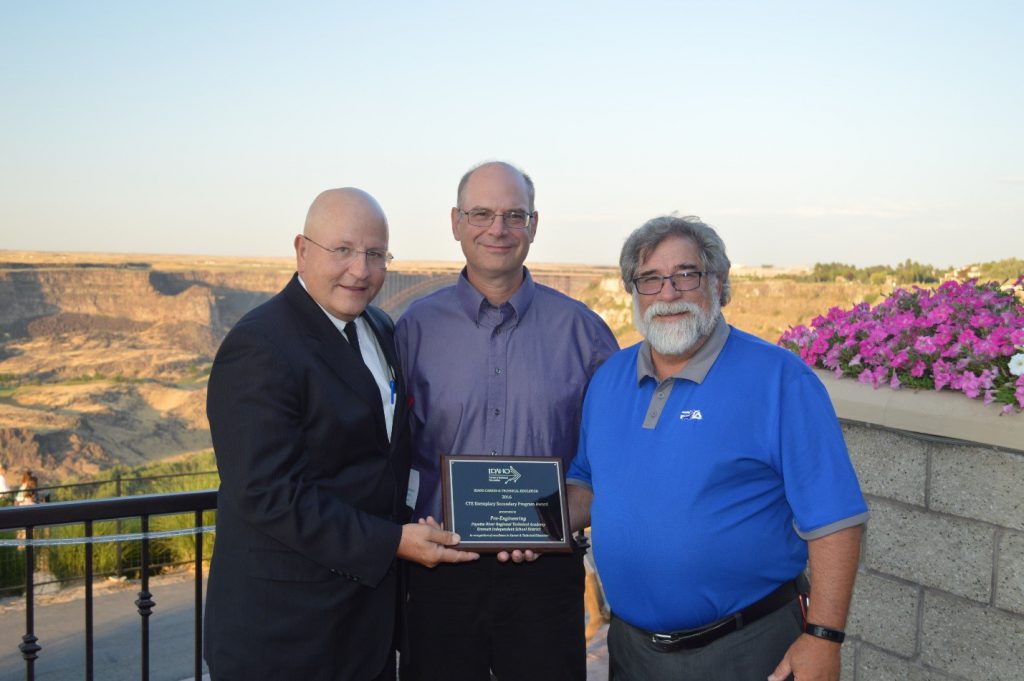
2016 Exemplary Secondary Program:
Pre-Engineering at Payette River Regional Technical Academy, Emmett, Idaho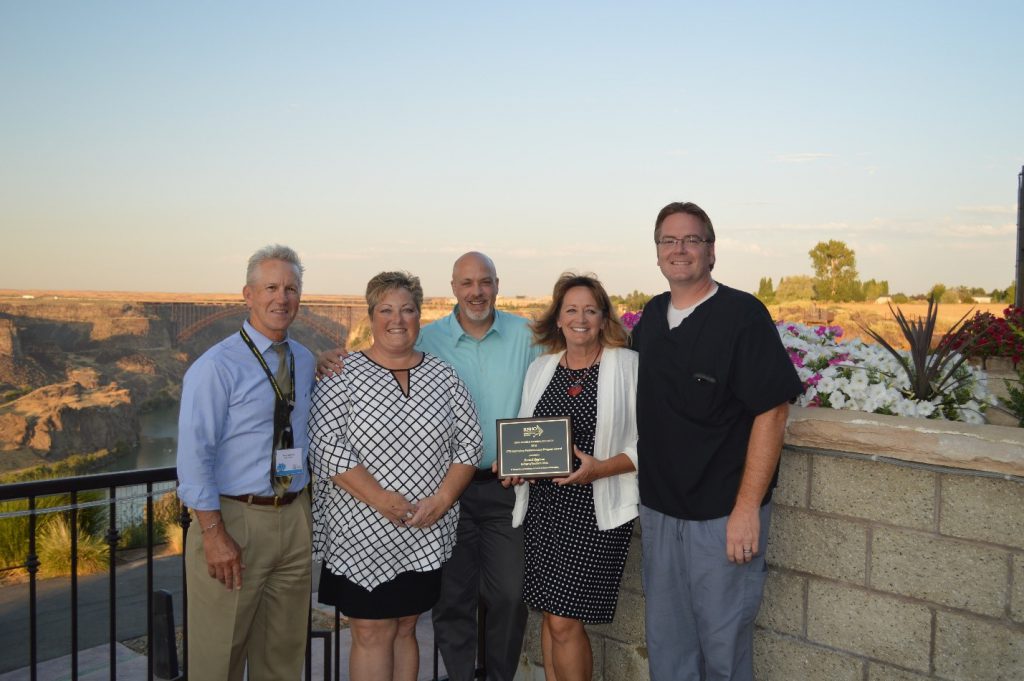
2016 Exemplary Postsecondary Program: Dental Hygiene at College of Southern Idaho, Twin Falls, Idaho
2016 Exemplary Secondary Program
Pre-Engineering at Payette River Regional Technical Academy, Emmett, Idaho
Pictured from left to right:
Mayor of Emmett, Gordon Petrie; Robert Salisbury, Instructor; Dr. William Knickrehm, Administrator
2016 Exemplary Postsecondary Program
Dental Hygiene at College of Southern Idaho, Twin Falls, Idaho
Pictured from left to right:
Terry Patterson, Dean of Instruction & Academic Affairs; Andie Dayley, Dental Clinic Manager; Jayson Lloyd, Dean of Health Science and Human Services; Cindy Harding, Director of Dental Hygiene; Matt Grayson, Dental Hygienist
- Students blend trades and compassion at Elevate Academy EastWhen Elevate Academy East construction instructor John Kramer dreamed up… Read more: Students blend trades and compassion at Elevate Academy East
- Nursing graduate finds support, success through Center for New DirectionsWhen Caitlyn Keelin walks the halls of Portneuf Medical Center’s… Read more: Nursing graduate finds support, success through Center for New Directions
- Cosmetology class turns heads in DaytonWhen Lisa Barnard launched the cosmetology program at West Side… Read more: Cosmetology class turns heads in Dayton
- Experience and passion drive growth in Salmon River’s ag programWhen James Boggan returned to Riggins in 2022, he thought… Read more: Experience and passion drive growth in Salmon River’s ag program
- Graphic and Web Design program builds national reputation on real-world success“Different years, different students, same results.” That’s the unofficial motto… Read more: Graphic and Web Design program builds national reputation on real-world success