 Official Government Website
Author: Megan O'Rourke
Finance program receives national accolades
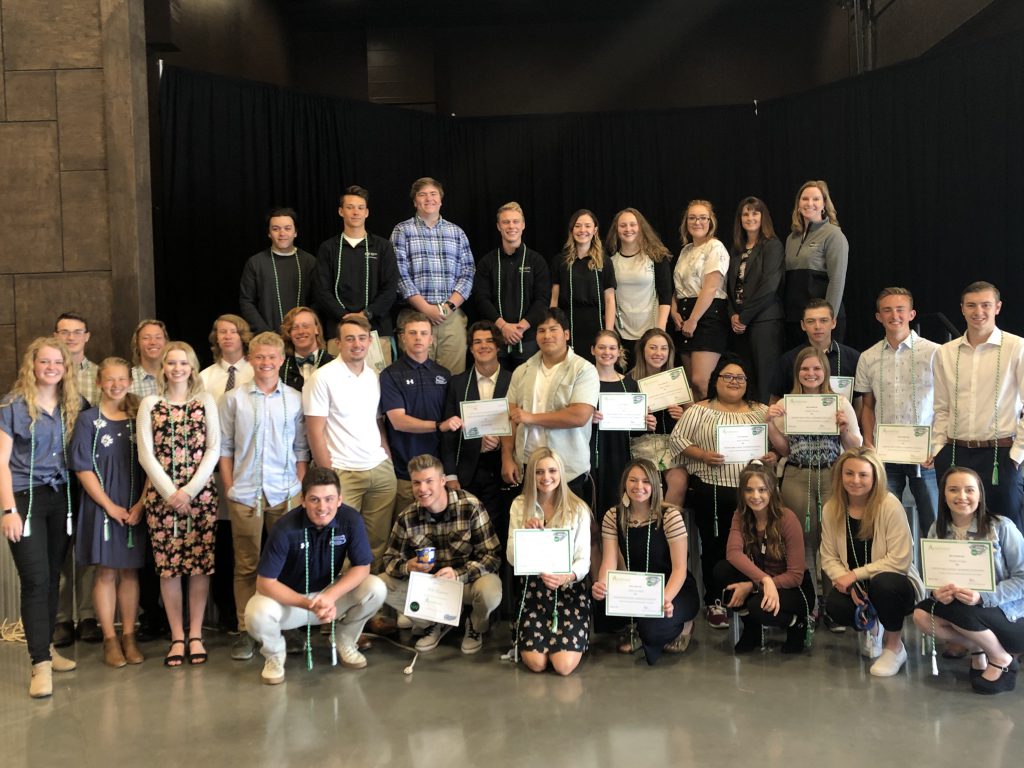
When Bev Hott started teaching business classes at the Career Technical Center at Skyline High School in 2008, only 12 students were enrolled in her accounting class.
“I taught a web course, a video course and accounting. There was no pathway or progression of courses and students started to ask, ‘Why am I taking this if it doesn’t lead anywhere?’” said Hott.
Hott, an educator with 28 years’ experience, was convinced that the answer to that question lay in giving students the classes they needed to succeed, not necessarily the courses they wanted to take. She also knew students would be more interested in her courses if they were sequenced in a way that related to the careers they were interested in.
After conducting extensive research, Hott found the National Academy Foundation (NAF), a network of education, business and community leaders who work together to ensure high school students are ready for college or a career. NAF’s approach to work-based learning and career exploration appealed to Hott. Every course contains a project component, and students can learn and apply real-world skills, like creating a business plan and pitching it to the advisory committee in the entrepreneurship class.
“We are super excited to reach the Distinguished level. The kids who have participated in the program understand what that distinction means. We want to maintain that status and keep providing this opportunity for our students.”
Bev Hott
“I also liked the fact that if students complete all the courses in the pathway and pass the certification test, they become NAFTrack Certified,” said Hott. “That means they receive preferential interviews at some of the top employers in the nation, like Lenovo, Verizon and Marriott.”
With her supervisor’s support, Hott set out to start a NAF Academy of Finance program at her school and hasn’t looked back. In the time since, Hott’s program has grown from just a dozen students to over 240, which Hott attributes to the hands-on, project-based nature of the curriculum. The program focuses on the financial pathway at its core, but it also incorporates elements of business, community service, career exploration and personal finance.
Students are encouraged to make presentations—complete with business cards—to groups like the Chamber of Commerce, Kiwanis and Civitan International, to explain what they’re doing in the program and ask for support. Through these experiences, students not only learn how to present themselves professionally but also have an opportunity to network with community leaders.
Those connections can lead to internships, visits to employers’ worksites, job shadowing and other opportunities. In fact, every student in the program is required to complete a 120-hour paid internship at the employer of their choice. If the internship is completed, it can count towards their senior project.
“Students get a chance to see what a job would be like and decide if that’s a direction they want to go,” said Hott. “Equally important, students learn that money comes from work; if you don’t work, you don’t get paid.”
Students learn to manage their hard-earned money through the personal finance course.
“It’s actually their favorite course,” said Hott. “We have a lot of guest speakers, and they learn everything from how to make a budget to how to manage credit responsibly.”
Service-learning and community service are also components of the program. In addition to partnering with the school’s student government organization to raise money and collect donations for Community Food Basket every January, they also engage in service projects at their school, like helping set up PSAT testing.
The holistic approach to applied learning and civic engagement has contributed to the program’s overall growth and quality. The program has achieved NAF’s Model level for the past two years and was one of 138 schools nationwide to achieve NAF’s Distinguished level during the 2019-2020 school year. The distinction is earned by annual assessment measures and site visits conducted by distinguished leaders, outside experts and NAF staff.
“We are super excited to reach the Distinguished level,” said Hott. “The kids who have participated in the program understand what that distinction means. We want to maintain that status and keep providing this opportunity for our students.”
Part-time teaching becomes full-time calling for Emmett teachers
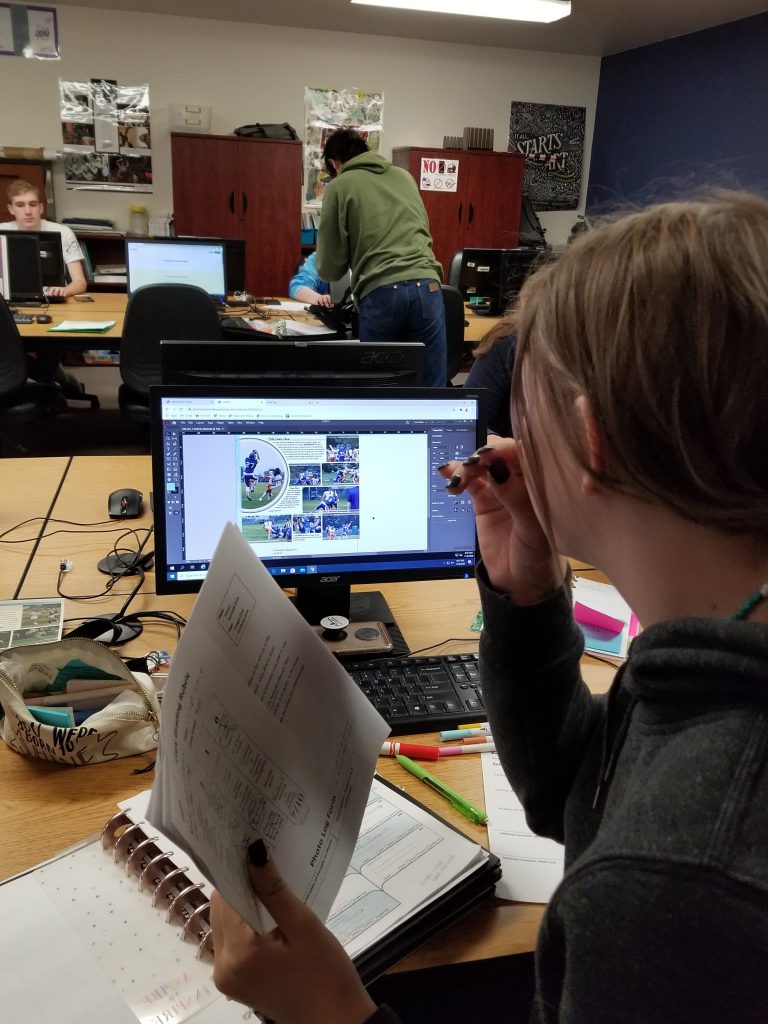
“They’re not just learning how to use industry-standard design software; they’re also learning lessons about time management, problem-solving and working as a team.”
Susan Salisbury
When Susan and Rob Salisbury started teaching Career Technical Education in the Kamiah School District, their intent was initially to provide advanced opportunities for their four children.
“The smaller school districts just couldn’t afford those types of teachers,” said Rob. “The administrators came to us and asked what it would take for us to start teaching at the school. At first, we were doing part-time IT work and teaching just a handful of classes to provide an opportunity for those kids. But soon, we both discovered we thoroughly enjoyed working with students and watching them learn.”
The part-time teaching jobs soon became a full-time calling, and when Dr. Bill Knickrehm invited the Salisburys to move from Kamiah to Emmett to start the Payette River Regional Technical Academy (PR2TA) in 2010, they jumped at the chance, with Susan teaching the graphic design classes and Rob teaching pre-engineering.
Early on, the Salisburys were committed to providing hands-on instruction and collaborating with Emmett High School (EHS) and the community to give their students real-world experience. They were also committed to empowering students to be self-directed and accountable for their progress.
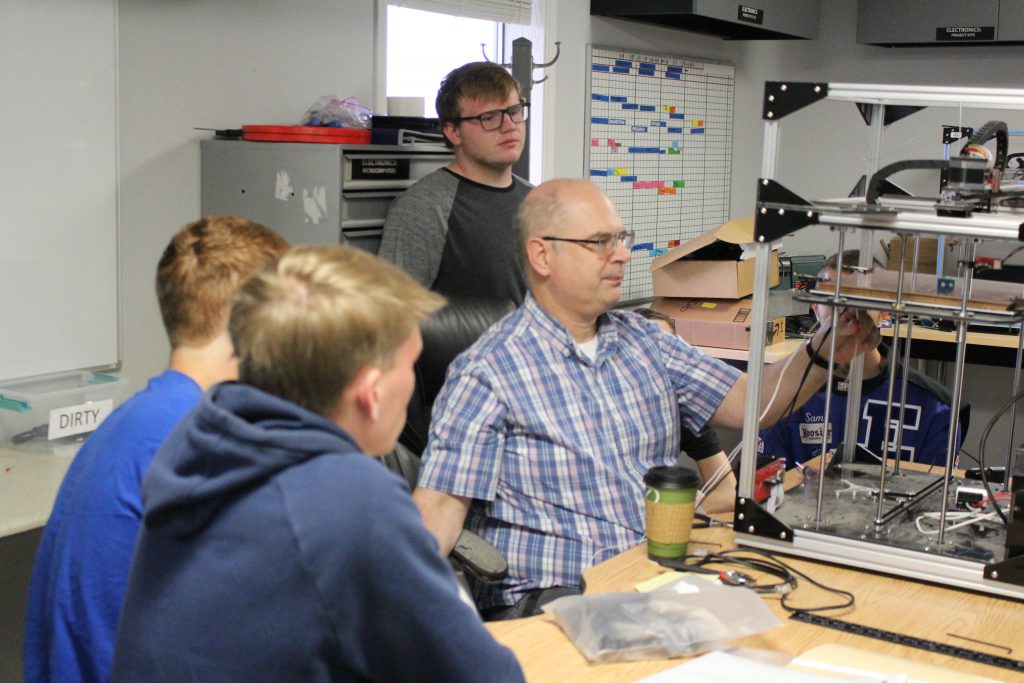
“They’re not just learning how to use industry-standard design software; they’re also learning lessons about time management, problem-solving and working as a team,” said Susan. “For example, my graphic design kids are completely responsible for laying out the EHS yearbook. The editor assigns stories and sets deadlines, not me, and the editor does daily round-robins to chart their progress.”
When PR2TA started, five of the classes were housed in mobile units on the EHS campus, and the engineering classes were held two miles off-site. Teachers and students had to get creative to ensure they could make the most of transportation time to and from EHS.
“We adopted the Agile methodology to review what we did the day before, and what we would be working on that day on the bus,” said Rob. “Students could also ask questions and troubleshoot, so when they arrived on-site, they were ready to work. And on the way back, we’d review what we did and discuss what we’d be doing the next day.”
Over a decade of dedication to quality instruction and real-world skills paid off during the 2018-2019 school year,* when both the graphic design and pre-engineering programs earned Distinguished status in IDCTE’s CTE program awards. Both programs had a 100% Technical Skills Assessments (TSA) participation rate, and a 100% pass rate for both the TSA and the Workplace Readiness Assessment.
Interest in what the Salisburys and other teachers at PR2TA were doing continues to grow, and so do their programs. In May 2020, the PR2TA board of directors seized the opportunity to purchase the old USDA building complex on Highway 16 and consolidate all the programs into one campus. Over the summer, all the PR2TA teachers worked together to assist with moving, painting and setting up classroom and lab areas.
“We are so proud of the efforts made by our teaching staff to ensure that face-to-face learning would take place beginning in August,” said Patti O’Maley, CTE coordinator for PR2TA.
Rob echoes O’Maley’s sentiment.
“We [the teachers] knew that every dollar we saved in moving and doing the work ourselves could go back into the programs, so we were only too happy to do so,” said Rob.
In fall 2020, six of the programs were moved to the new campus, and plans are in the works to remodel the kitchen to accommodate the culinary arts program and construct new buildings for auto shop, welding and agricultural science. An aviation-based curriculum is in the works, and a Cessna 150F was recently donated to PR2TA for future course offerings.
While coordinating schedules between activities at EHS and classes at PR2TA is still a challenge, students and teachers are loving the convenience of being located on the same campus—and the indoor plumbing.
“You take for granted things like not having to go outside to use the bathroom,” said Susan. “Or, we used to have to schedule meetings with other teachers, and now we can just pop down the hall.”
*Due to the coronavirus, no assessments were conducted during the 2019-2020 school year.
Industry connections and experience put north Idaho program on the map

Rodney Farrington didn’t plan to teach hospitality management. But after ending a 28-year relationship with the hospitality corporation that employed him, the non-compete clause in his contract prohibited him from working in the industry he loved for three years.
“I had no idea what I wanted to do next, so my wife suggested I go back to Lewis-Clark State College (LCSC) and get an associate degree in hospitality management,” said Farrington.
After he graduated in 2012, Farrington opened a restaurant in Uniontown, Washington. He was content running his restaurant—until he received a phone call from LCSC asking if he’d fill in as an adjunct professor for the rest of the spring 2016 semester.
“Once I feel into the world of CTE, I understood how I could connect the industry I’ve been involved with my whole life with helping students get the skills and theory they need to start their own successful careers.”
Rodney Farrington

“The professor that taught me had quit due to health reasons, leaving two students with no professor to help them complete the program,” said Farrington. “I never in my life thought of myself standing in front of a class imparting my wisdom on the students. I just did it for the experience; I thought it would be nice to have those two classes on my resume, but I ended up absolutely falling in love with the job.”
Five years later, Farrington has taken what his predecessor had on file and added his own twist to it. Initially, he removed the classes he didn’t think were relevant and created a true hands-on connection to industry for each class.
“Once I fell into the world of CTE, I understood how I could connect the industry I’ve been involved with my whole life with helping students get the skills and theory they need to start their own successful careers,” said Farrington. “I only get them for two years. To the best of my ability, I want to create a real-life connection to what they’ll experience in the industry. That’s why I have them complete a project-based learning outcome in each course.”
Examples of Farrington’s hands-on approach to education include planning a trip around the world in Introduction to Hospitality, creating a business plan for a food truck in Hospitality Managerial Accounting, and designing a restaurant from the ground up in Food and Beverage Management.
“That entails designing a menu, understanding the pricing structure, using desktop publishing applications to design the menu, and presenting the concept to ‘investors,’” said Farrington. The “investors” include bankers, investors and financial planners affiliated with the industry who serve on Farrington’s Technical Advisory Committee (TAC).
“Money spent on training and recruiting is one of the largest expenses employers incur,” said Farrington. “The people on my TAC say they would far rather hire someone who has a good understanding of what the job looks like day in and day out and invest in them than train someone from the ground up and risk high turnover rates.”
It was the desire to reduce turnover that brought Farrington to McCall’s Shore Lodge in 2017. Because of the work Farrington did redesigning his classes—and the partnerships and connections he built in the process—he was invited by the Albertson Foundation and the A. L. Scott Foundation to discuss ways to reduce turnover and improve employee retention at the Shore Lodge.
“They lose almost half of their employees when students go back to school in the fall. They came to me looking for a way for student employees to stay on-site while completing their CTE-driven education,” said Farrington.
After hearing the Shore Lodge’s concerns, Farrington developed a program he calls online, on-site industrial education (OIE). Under his model, the employer provides pay, possible packaged amenities like meals and lodging, and any other additional benefits while the students work on-site getting hands-on, industry-driven training, and completing their degrees. Upon graduation, employers can offer tuition reimbursement as a job perk for every year that student stays on. Farrington has one student piloting his OIE concept this semester.
“For each class, we have to identify specific benchmarks with each student and their supervisor to verify what they’ve accomplished and document that they’ve done sufficient work to earn the degree,” said Farrington. “For example, in the Food and Beverage Management, we can connect the theory of inventory control with evidence of inventory control in practice on the job.”
The Shore Lodge is excited about the prospect of using Farrington’s OIE model in practice, and the Sun Valley Resort has expressed an interest in OIE, too. Farrington is excited about what the model can mean for Idaho’s hospitality industry and his students.
“With Idaho being the number one state people are moving to, hospitality and tourism are growing. I truly believe Idaho could be the forerunner in the new, post-coronavirus version of hospitality, travel and tourism education. I want this to become a small, boutique hospitality management program for those up-and-coming celebrities in the field,” said Farrington.
Idaho switches GED credentialing service, waives fee for High School Equivalency Certificate

Effective Sept. 28, 2020, the Idaho Division of Career Technical Education (IDCTE) will move from DiplomaSender to Parchment to manage and verify all General Education Development (GED) records for the state. The GED is a series of four tests that measure high school equivalency. More than 1,900 Idahoans passed the GED in 2019, and even more are expected to pursue a GED in 2020 because of COVID-19.
“We decided to move to Parchment because it directly connects with the GED records system,” said Molly Valceschini, State Program Director, Adult Education and GED for IDCTE. “That means students don’t have to create an additional account to access their documents or experience delays in getting their documents simply because of account login issues that take a long time to resolve.”
Now, students who pass the GED will be immediately sent an email notification with links to download electronic versions of their documents and instructions for ordering paper copies. Also, more than 90% of U.S. admissions offices can receive and download electronic documents from Parchment securely.
“That can really make a difference for students applying for jobs or post-secondary institutions,” said Valceschini.
Because all records can now be accessed electronically, the State Board of Education approved IDCTE’s proposal to waive the $10 processing fee for the High School Equivalency Certificate (HSEC), which is the GED counterpart to a high school diploma. After a tester passes the GED test series, they may order an HSEC directly from Parchment.
“IDCTE supports increasing equity and access for Idaho students. Students who earn their HSEC by passing the GED deserve to receive the document they’ve earned free of charge,” said Valceschini. “I think it’s important for Idahoans to move forward in their academic and professional lives without any additional barriers, and removing the certificate fee is a step in the right direction.”
State Board of Education approves new definition of specialized certificate

The Idaho State Board of Education approved the addition of a new section to Idaho State Board of Education Governing Policies & Procedures, Section III.E during the Aug. 26 regular Board meeting. This change defines a specialized certificate, which provides additional opportunities to further develop or upgrade skills in an occupation for individuals who already hold a certificate or degree.
The new definition distinguishes a specialized certificate from the current academic, basic, intermediate, and advanced technical certificates. The Idaho Division of Career Technical Education (IDCTE) proposed the change after they and the Technical College Leadership Council identified a need to develop a specialized certificate for completing specific, industry-validated courses that are sequenced to develop and upgrade skills in an occupation.
“This is not entry-level training. It’s really for more advanced students who have industry experience and are working towards more advanced technologies and experiences,” said Jeffrey Ober, Ed.D, dean of career and technical education at Lewis-Clark State College.
“We needed a certificate that represented work completed by students that were at a fairly advanced level but involved fewer credits,” said Barry Pate, Ph.D., dean of career and technical education at the College of Southern Idaho. “We have students who may have already completed a degree and are returning for additional advanced training. This specialized certificate is awarded for that level of achievement, even though the number of credits completed may remain small.”
The specialized certificate will allow technical colleges to continue to work closely with their regional and local employers to provide an additional level of specialized training.
“Our technical colleges play an important role in creating new opportunities for adults to advance in their careers,” said Adrian San Miguel, Director of Program Services for IDCTE. “As we work towards economic recovery and regrowth, this certificate will help to fill critical skills gaps.”
Fire service training administration to be moved to Idaho Division of Career Technical Education

During the State Board of Education’s Aug. 26, board meeting, Idaho Division of Career Technical Education (IDCTE) State Administrator Clay Long announced that they intend to transfer Fire Service Training (FST) from the College of Eastern Idaho (CEI) to IDCTE in July 2021.
FST provides fire training credentialing for career and volunteer firefighters in Idaho. Credentialing is the certification process for firefighters after they have completed an approved fire service training course. Many municipal fire departments require firefighter credentialing to even test for a position.
CEI had administered FST since 2014 when the FST program was transferred to the technical college system to gain efficiencies. During that time, CEI secured more than $1 million in federal grant funding to purchase state-of-the-art fire training equipment to support ongoing skills development for more than 180 Idaho fire departments.
The proposed change will ensure Idaho’s FST provides a statewide system that allows institutions to meet the needs of their region and industry. FST will use IDCTE’s existing SkillStack® system for student record management, and institutions will have the flexibility to deliver needed training to their region. FST will continue to provide training and services for regions without fire training programs at their technical colleges.
“Over the years, CEI has made significant progress in administering FST. I am excited to build on that success and leverage IDCTE’s existing statewide framework to ensure access to training and certification for all individuals who serve in the fire service in Idaho,” said Long.
“The Idaho Fire Chief’s Association is excited about collaborating with IDCTE. We feel this is the best move to ensure career and volunteer firefighters in Idaho are safe, educated, and able to respond to emergencies,” said Myklebust.
Myklebust added that collaboration with IDCTE would foster relationships with regional colleges to provide education and keep students in Idaho to serve their local fire departments.
The decision also has the support of CEI.
“We look forward to working with IDCTE to transition this important training program back to the state to provide further efficiencies and access by both professional firefighters and students,” said Michelle Holt, executive director of the Workforce Training and Continuing Education Center at CEI. The decision was made after several months of conversations with a variety of stakeholders, including CEI, the College of Southern Idaho, the Technical College Leadership Council, the Idaho Fire Chiefs Association, and the State Board of Education. In the coming months, IDCTE will work closely with these stakeholders to ensure a smooth transition and minimal disruptions. A copy of the memo announcing the change was sent to stakeholders.
We’ve reorganized the Division to serve you better!
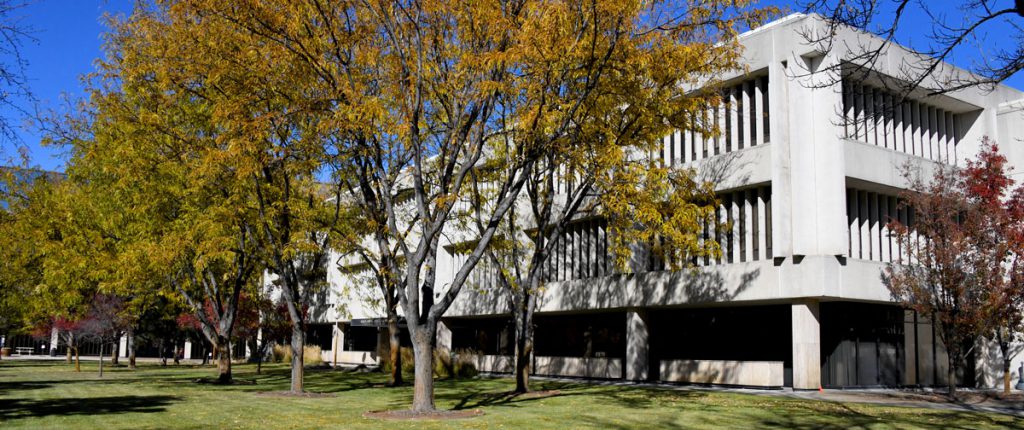
The Idaho Division of Career Technical Education (IDCTE) is pleased to announce we’ve reorganized some of our departments to improve communication and resource allocation and allow our internal teams to work more collaboratively, holistically, and proactively.
This reorganization created two new departments—Program Services and Educator Services—and provided opportunities to promote some of our hard-working employees:
Adrian San Miguel’s title of Director of Postsecondary and Workforce Training has been changed to Director of Program Services to reflect the work of his department better. He will continue to provide leadership and oversight of postsecondary, adult, and federal programs. Reporting to San Miguel are James Barrett-Spencer, Lisa Costa, and Justin Touchstone.
Barrett-Spencer will serve as Assistant Director of Federal and Related Programs. In his new role, he will continue to provide direct oversight of Perkins and oversee all federal grant programs, adult education, and other specialized training programs. He previously served as the Federal Compliance Coordinator.
Costa will serve as Assistant Director of Student Leadership and lead the Student Leadership team’s efforts to support local programs in providing student leadership opportunities through our seven CTSOs. Previously, she served as one of our Career Technical Student Organization (CTSO) managers, providing leadership to FCCLA and DECA.
Touchstone will serve as Assistant Director of Program Quality and will lead the Program Quality team to ensure quality program delivery and support through Idaho’s secondary and postsecondary CTE programs. He previously served as Senior Program Quality Manager. He will continue to maintain his Engineering and Technology Education program portfolio.
The Educator Services department consists of our Professional Development and Educator Certification teams. Dona Orr will now serve as Director of Professional Development and will provide oversight for IDCTE’s Professional Development services. Orr’s initial focus will be refining and launching an individualized InSpIRE Educator Program and building on the success of our current InSpIRE model. In her prior role, Orr served as the Director of Secondary Education, where she provided leadership over the statewide secondary CTE system.
Kristi Enger will now serve as the Director of Educator Certification. In addition to focusing on educator certification, she will act as the liaison between IDCTE and the University of Idaho and Idaho State University’s teacher educator preparation programs. Previously, Enger served as the Director of Certification and Professional Development and played a critical role in developing the current InSpIRE Teacher Educator program and overseeing Educator Certification.
Please join us in congratulating our employees on their new roles. An updated organization chart is now available. Feel free to reach out to our staff if you have any questions or comments. We hope these changes better serve the students, educators, and employers involved in Idaho’s CTE system.
Idaho Division of Career Technical Education announces its 2021 Leadership Institute cohort
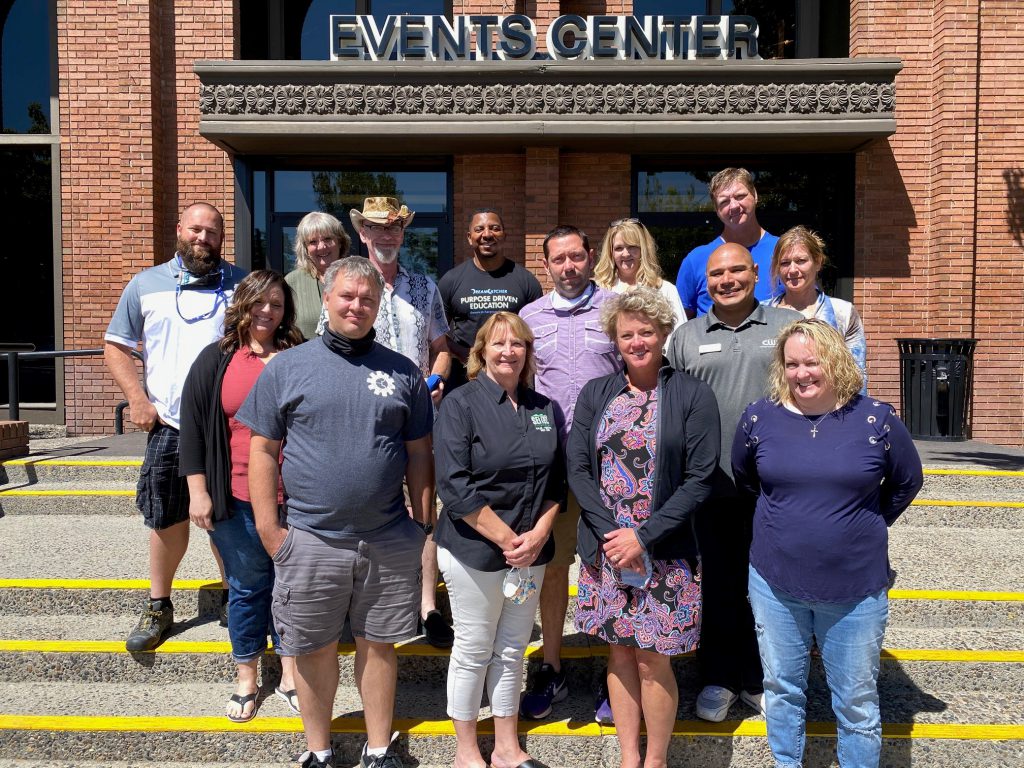
The Idaho Division of Career Technical Education (IDCTE) is pleased to announce the newest members of its Leadership Institute. Sponsored by IDCTE, the Institute is a three-year program designed to prepare the next generation of district, regional, and state leaders in Career Technical Education (CTE) through meaningful, collaborative, and reflective leadership experiences that are forward-thinking and change-oriented. Participants learn about state and national governance and laws, organization and administration and funding, and support for career technical education institutions.
To participate in the Institute, a member must apply and be recommended by their supervisor, and be a member of the Association for Career and Technical Education. Applicants are then ranked based on their qualifications and selected by the IDCTE staff to ensure equal geographic and institutional representation across the state. Only five members are initiated into the Institute each year, and 18 cohorts have completed the program since its inception in 1999. Its 90 graduates have become leaders of secondary, postsecondary and adult programs in Idaho.
The following 2021 cohort members were welcomed into the Institute during the kick-off meeting held last week in Boise:
Teresa Danielson is a family and consumer sciences teacher at Mountain View High School in Meridian. According to Cliff Rice, Danielson’s principal, she is “organized, passionate, and driven to give her students and her organization 100% every day.” Danielson has received New Teacher of the Year awards from both Career Technical Educators of Idaho and the Idaho Association of Teachers of Family and Consumer Sciences. She serves as the Family, Career, and Community Leaders of America (FCCLA) advisor for District 3, advises the six state FCCLA officers, and is a frequent consultant for state and national events. She has a master’s degree in education in career and technical education leadership from Utah State University.
Vicki Isakson serves as director of Workforce Training and Community Education at North Idaho College (NIC). Lita Burns, vice president for instruction at NIC, considers Isakson to be a strong collaborator who will “build bridges and pathways across the state.” Among her many accomplishments, Isakson developed the first school-to-registered apprenticeship programs in Idaho and created the long-running Hard Hats, Hammers, and Hot Dogs annual event to introduce students to the construction, manufacturing and wood products industries. She is currently seeking approval of nine federal Registered Apprenticeship Programs to provide instruction and sponsorship for workforce training. She holds a master’s degree in organizational leadership from Gonzaga University and is a certified master trainer in the Workplace Excellence Series.
Chet Jackson is the instructor for residential construction technology at Cassia Regional Technical Center (CRTC). He believes the job force crisis is an ongoing issue in Idaho and should be addressed by educating the public regarding the importance of hands-on careers. According to Curtis Richins, CRTC’s director, Jackson has excitement, enthusiasm, and “the ability to monitor his students’ desires and assess students’ needs.” This has led to joint projects with other CRTC departments and the establishment of a new cabinetry program, thus providing students with even more employable skills. He holds a bachelor’s degree in workplace training and leadership from Idaho State University and is working on a master’s degree.
Stephanie Mai is the Program Quality Manager for Health Professions and Public Safety at IDCTE. Her vision is for CTE pathway programs to become as highly regarded as AP and honors classes. Her experience as a postsecondary instructor and serving on several boards and technical advisory committees enable her to see future CTE programs as collaborations among high school, higher education institutions, and industry. “Stephanie is such a positive, fun person, and has an incredible ability to connect with others and build relationships with them. The Institute will help her see processes and approaches through the lens of others in the CTE system, which will help IDCTE be more responsive to its stakeholders,” said Adrian San Miguel, director of program services at IDCTE and Mai’s supervisor. She holds a master’s degree in organizational leadership and performance from Idaho State University and is currently working on her CTE administrator’s certification.
Dr. Yvonne Thurber is the principal of Sandcreek Middle School in Idaho Falls. She hopes helping CTE grow in Idaho will strengthen the economy and provide opportunities for rewarding careers without the time and expense of a four-year institution. Thurber is a project leadership liaison who works diligently to ensure that her teachers in family consumer science, technology, and construction and engineering have the same opportunities as high school teachers. “Dr. Thurber has a firm commitment to doing the right thing for students. She is willing to have crucial conversations and make necessary changes to achieve better outcomes for her students,” said Dr. Scott Woolstenhulme, Bonneville School District superintendent. She holds a bachelor’s degree in elementary education and a master’s degree in educational leadership from Idaho State University, and a doctorate in educational leadership from Northwest Nazarene University.
“We’re excited to welcome this talented group of educators to the Leadership Institute and look forward to continuing to build leadership skills for those within our career technical education system in Idaho,” said Clay Long, state administrator.