 Official Government Website
Author: Megan O'Rourke
Cosmetology class turns heads in Dayton
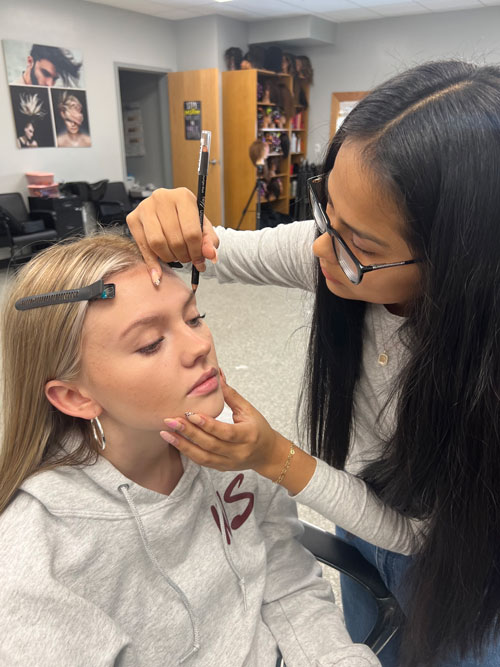
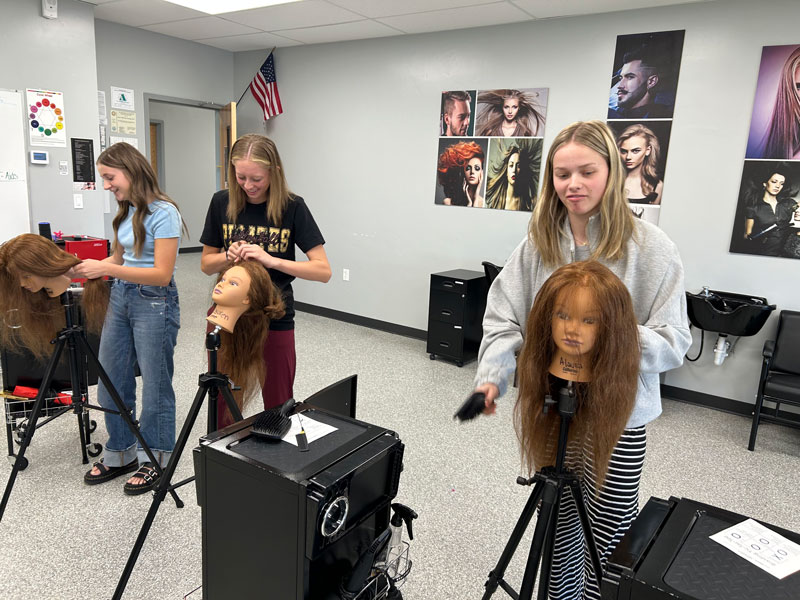
When Lisa Barnard launched the cosmetology program at West Side High School five years ago, she wasn’t just adding another elective. She was building a career pathway that blends technical skill, creativity and real-world experience.
Barnard brings more than 27 years in the industry—20 as a salon owner—and a family heritage steeped in hairdressing.
“I come from a family of hairdressers,” Barnard said. “It’s in my blood.”
The idea to start the program came when local CTE leaders approached her about teaching. At the time, Barnard was struggling with chemical allergies that made salon work difficult. Teaching, she realized, was a way to stay connected to the field while helping students.
“It was a good opportunity to try something new but still do what I love,” she said.
Demand was immediate. A regional survey of students ranked cosmetology among the most requested programs, and today Barnard has 36 students enrolled across two classes. Interest is so high that she turns away applicants each year.
The program is structured much like a postsecondary cosmetology school. Students attend class daily for two hours and spend full Fridays in a student-run salon that serves the community.
“My students go into school already knowing more than a lot of others, they feel overprepared, which is exactly what I want.”
Lisa Barnard
“They’re so scared the first time they work on a live person,” Barnard said with a laugh. “But within a month, Friday salon day is their favorite.”
The curriculum covers haircutting and coloring, manicures, pedicures, facials and nail enhancements. Students begin with mannequin work before moving into client services. By graduation, they’ve logged about 800 hours toward the 1,600 required for state licensure.
“They’ve learned everything there is to learn,” Barnard said. “They just need more hours and hands-on practice.”
The program’s value is undeniable. The average tuition for cosmetology school ranges from $20,000 to $25,000. By completing half their training in high school, Barnard’s students save an average of $7,000 to $10,000. They also enter postsecondary programs ahead of their peers.
“My students go into school already knowing more than a lot of others,” Barnard said. “They feel overprepared, which is exactly what I want.”
Barnard’s graduates often find work quickly. She currently employs three former students in her own salon, and many others work in the region. Salaries vary, but Barnard said stylists who put in the time to build a clientele can double their starting wages within a few years.
The program also builds confidence. Barnard recalled one student who struggled academically and needed extra help with tests. By the end of the program, that same student was excelling.
“As soon as she realized she had a talent for it, everything fell into place,” Barnard said. “She ended up placing at state SkillsUSA and is now thriving in a salon.”
Looking ahead, Barnard hopes to expand offerings with an introductory course and possibly summer sessions to help students log more hours. For now, she’s proud of the foundation she’s built.
“It’s an amazing opportunity for these kids,” she said. “They love it enough that they don’t mind putting in the work—and that’s what makes it all worth it.”
Experience and passion drive growth in Salmon River’s ag program
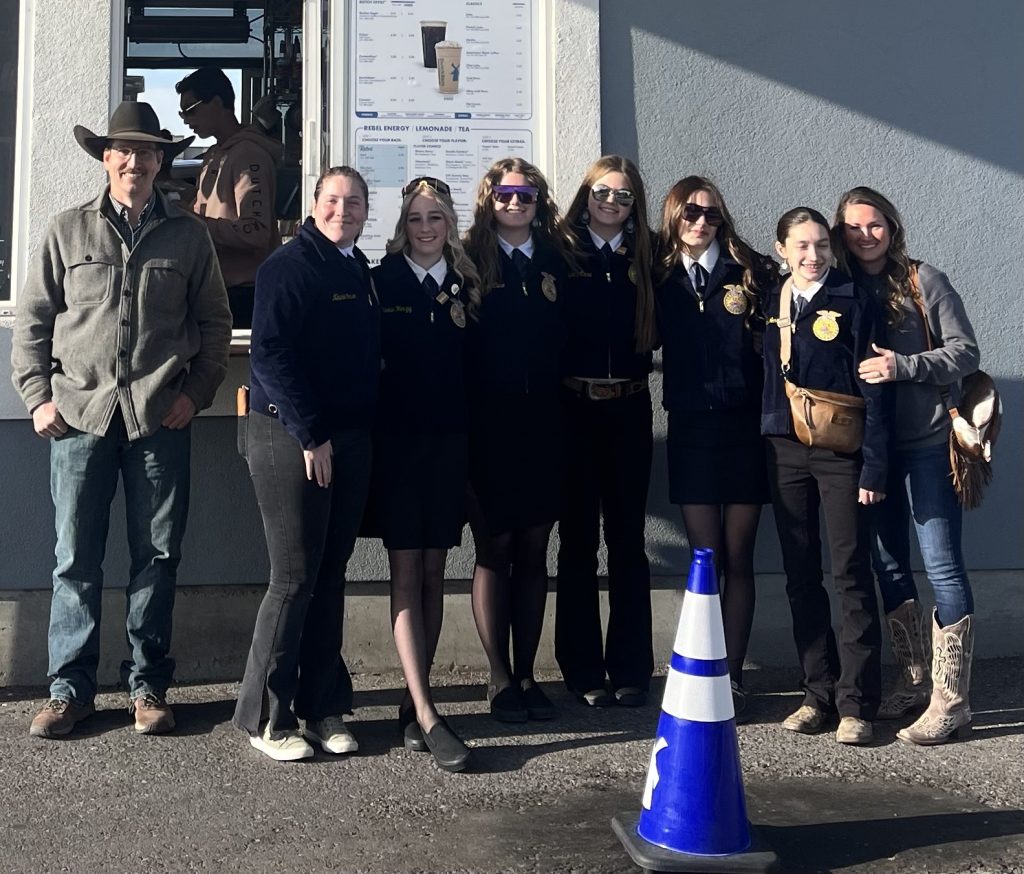
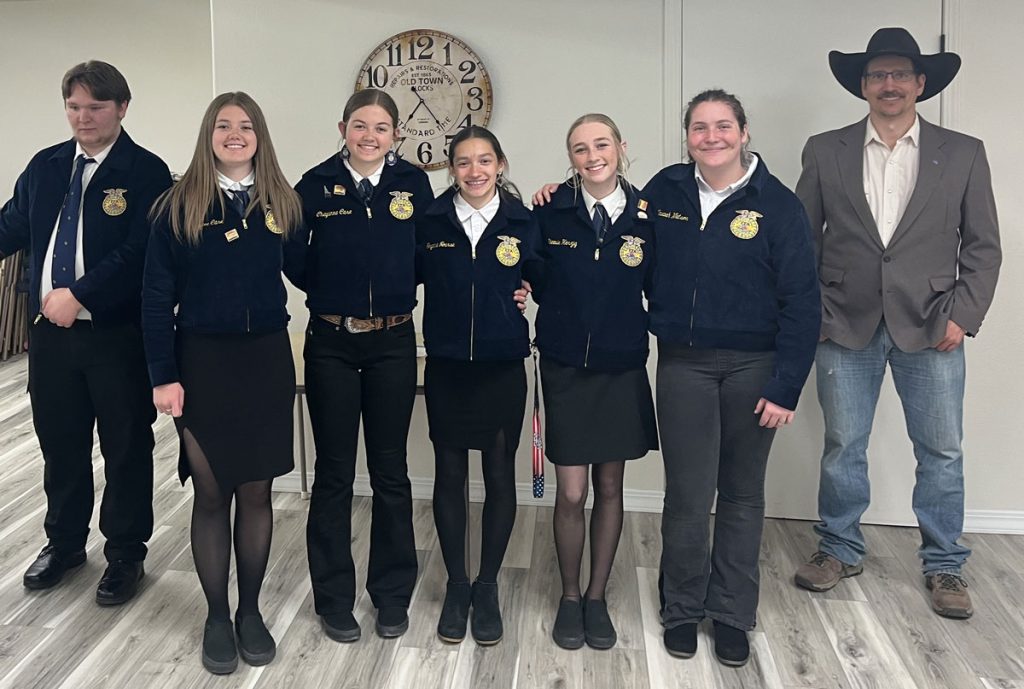
When James Boggan returned to Riggins in 2022, he thought he knew what to expect. The Salmon River High School graduate with a degree in rangeland ecology and management from the University of Idaho had worked for Agri Beef Co. and Simplot before stepping into the classroom. But teaching quickly proved to be a different kind of challenge and opportunity.
“I had to learn how to be a teacher and I really had no clue where to start,” said Boggan. “Going through the Inspire Ready program and First Camp helped me a lot. Having support from other educators around the state made a huge difference.”
His vision soon expanded beyond the classroom. With the support of the district, Boggan has added a greenhouse, doubled the number of welding booths and secured a new plasma table. He is also laying the groundwork for an aquaponics program.
“I thought I was just going to be in the classroom and in the shop,” said Boggan. “But opportunities kept opening up and we’ve been able to expand in ways I never expected.”
One of his biggest accomplishments was rechartering the Salmon River FFA chapter in 2023. What started with three students has grown to 10, all eager to take on Career and Leadership Development Events.
“It’s amazing how the FFA program helps students grow into leadership roles,” said Boggan. “I’ve seen them become more accountable, more confident and more driven.”
For Boggan, the impact of FFA is personal. As a student, he was part of the first chartering class in Riggins and credits those early experiences with shaping his own career. Now, he uses CDEs and LDEs not only as competitions but as curriculum guides, helping students tie classroom learning to real-world applications.
“Livestock evaluation has been the event students connect with the most,” said Boggan. “But now I have kids interested in public speaking, horse judging, forestry and parliamentary procedure. That’s exciting.”
He points to individual stories as proof of the program’s value.
“One student was a natural welder and always excited to take on new projects. He showed younger students what he made and now they’re all excited to be in shop class. He’s pursuing a degree in welding,” said Boggan. “Another student loved plant and animal science and took charge of our buck and bull scoring fundraiser. They even bought their own scoring kit and now measure elk and deer for people in the community.”
Looking ahead, Boggan has ambitious goals: strengthen welding and mechanics programs, expand the greenhouse, build aquaponics systems and take students to the FFA National Convention.
“One of our chapter goals is to go to Nationals in the next five years,” said Boggan. “The students are already working hard to make that happen.”
For Boggan, it all comes back to giving students opportunities that prepare them for the future—whether that’s in agriculture, leadership or life.
“I didn’t know if I would enjoy teaching when I started,” he said. “But seeing the look of surprise on a student’s face when they learn something new—that’s what makes it worth it.”
Graphic and Web Design program builds national reputation on real-world success
“Different years, different students, same results.”
That’s the unofficial motto of the Graphic and Web Design program at North Idaho College (NIC). Program Coordinator Philippe Valle has spent more than two decades making sure it holds up in the real world—and NIC students have the awards to prove it.
In 2025, they brought home Best of Show and multiple Gold, Silver and Cobalt awards at the Spokane American Advertising Awards (commonly known as the Addys)—the fifth time an NIC student has claimed the top prize. In 2024, students earned a Cobalt Award for web design. In 2023, they swept the Addys, with one student taking Best of Show plus Gold, Silver and Bronze medals while others collected regional and district honors that advanced to the national stage. Beyond the Addys, students have won the Printing Industry of America poster competition, designed logos and T-shirts for community organizations and even created a Pepsi semi-trailer wrap seen across the Northwest.
Two decades ago, when Valle first stepped in, the picture looked very different. He came to the United States in 1987 after beginning his design career in Europe . After working with Fortune 100 companies, he was asked to take over NIC’s then-struggling program in 2002. At the time, enrollment was just four students.
Today, the program functions like a two-year design agency that feeds talent to local employers and national brands. Students can earn a one-year certificate on the way to an advanced certificate or associate of applied science degree. Coursework covers Adobe applications, social media, UI/UX, video production, web development and portfolio building, with client projects and industry speakers integrated throughout.
“We teach practical and relevant skills to prepare our students for the ever-changing design industry,” Valle said.
Instructor and alumna Lydia Ramus, who worked in the field before returning to teach full time, said the format accelerates growth.
“There are so many opportunities for them,” Ramus said. “By the time they graduate, they’re ready to go out and do everything.” She added that courses are designed to build upon and support one another. “It’s constant reinforcement all around,” she said.
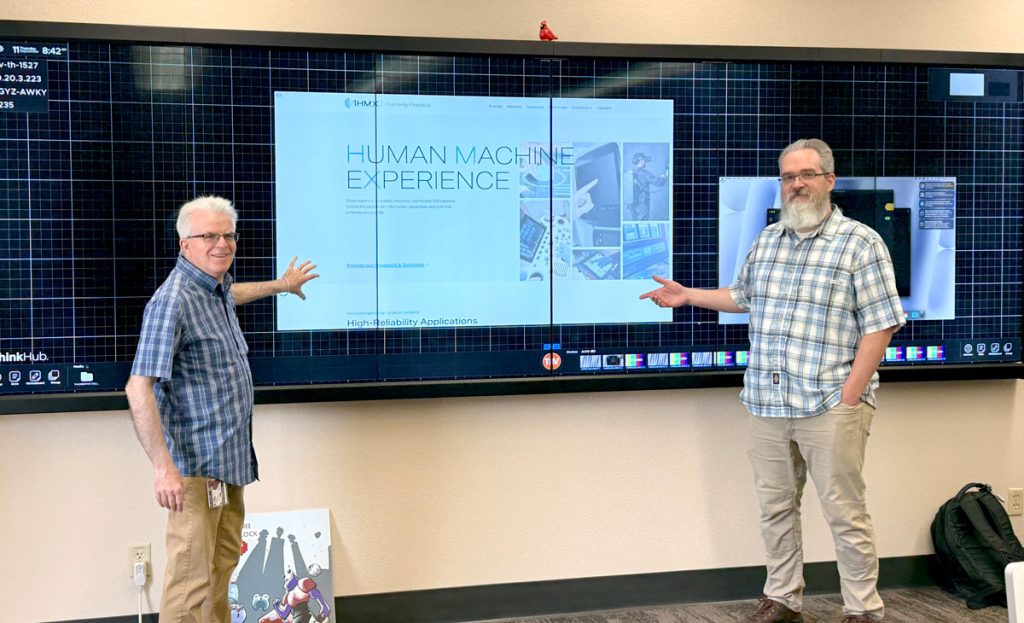
Funded through Gov. Brad Little’s Building Idaho 2.0 one-time grant, the program’s $500,000 lab expansion has transformed its footprint. The space now rivals—and in many cases surpasses—the technology in professional design agencies. Students work on iMac M4 workstations networked across the studio, experiment with 3D printing and packaging design and collaborate in front of a 14-foot interactive touchscreen wall that projects student work, allows real-time annotation and archives feedback for later review. They also train on a computer numerical control machine—industrial-grade equipment used to cut precision shapes from a variety of materials.
Valle said the facility was designed to feel like an agency rather than a classroom. Its central location on campus also gives the program visibility, often drawing in visitors who stop to ask about the work on display.
Those experiences lead directly to jobs. Valle cites a 95% placement rate, with many students landing internships or offers before graduation. Alumni now work at Adobe, Marvel, Carvana, Netflix Animation and high-end print firm Digital Lizard, as well as regional employers such as Buck Knives and Litehouse Foods.
“When you’ve worked in the industry for a long time, you know people,” Valle said. “We bring that network to our students.”
State Board of Education names Peter Risse administrator of the Idaho Division of Career Technical Education
The Idaho State Board of Education has named Peter Risse to serve as the next administrator of the Idaho Division of Career Technical Education (IDCTE). His appointment is scheduled to go before the Board for formal approval in October.
“Peter’s experience building partnerships between education, government and industry makes him uniquely suited to lead Idaho’s Career Technical Education division,” said Jennifer White, Executive Director of the Idaho State Board of Education. “We are excited to have his vision and leadership as our state continues to expand opportunities for Idahoans to gain the skills they need for today’s workforce.”
Risse currently serves as Director for Government and Industry Relations in the Office of the President at Boise State University. He previously held the role of Associate Dean of the Division of Extended Studies at Boise State where he oversaw community-based education programming, non-credit professional and continuing education and adult-focused degree programs. Prior to working at Boise State, Risse was the Director of the Chugiak-Eagle River Campus and Assistant Professor of Technology Education for the Community and Technical College at the University of Alaska. In that role, he led large-scale community and technical college training programs in fisheries, marine safety, oil and gas, and adult basic education. Risse earned a master’s degree in adult education from the University of Alaska Anchorage.
“Idaho’s continued success depends on a workforce that is ready to meet the challenges of tomorrow,” said Risse. “Career technical education equips our students with the hands-on skills and experiences they need to succeed, and I am eager to work alongside our industry and education partners to strengthen that pipeline.”
FCS teacher brings real-world skills to rural Idaho
At South Fremont High School, family and consumer sciences (FCS) teacher Kristy Hammond is proving that life skills aren’t “just electives.” They’re stepping stones to careers, confidence, and even small businesses.
“I never imagined I’d become an FCS teacher,” Hammond said. “But when the job opened, I realized all the jobs I’d worked in high school and throughout college—restaurant work, bookkeeping, preschool teaching, even baking for friends and family—actually taught me valuable skills. Each one gave me knowledge and experience that now makes me stronger in my role as an FCS teacher.”
Now in her fourth year teaching, Hammond leads two main career pathways: culinary arts and hospitality. Students begin with introductory food and nutrition courses, then advance to hands-on training. The capstone classes, she says, go far beyond textbooks.
“In our culinary capstone, students partner with Panera Bread in Idaho Falls,” Hammond explained. “They rotate through every station—taking orders, prepping food, even washing dishes. It’s the real deal, and the kids love it.”
Her program also partners with Texas Roadhouse, giving students field trip experiences that highlight customer service in a high-energy environment. Locally, Hammond works with a retirement home chef who calls her when job openings arise and often hires her students on the spot thanks to the food handler certifications earned in class.
One of Hammond’s proudest initiatives is Food Truck Wars, a capstone project where seniors design logos, set menus and run mock food trucks during finals.
“The teachers come in, sample everything, and vote for their favorite,” Hammond said. “It’s amazing to watch the kids apply every skill they’ve learned—cooking, budgeting, marketing—in one project.”
That entrepreneurial spirit carries into FCCLA, the national student organization tied to FCS programs. At South Fremont, Hammond’s students sell decorated sugar cookies for Christmas and Valentine’s Day, raising up to $1,600 each year.
“It started as a school fundraiser, but it grew into community orders,” Hammond said. “Parents wanted cookies delivered to their elementary school and junior high students. Teachers were making large orders for neighbor gifts. My culinary students were baking nonstop for weeks.”
For Hammond, the impact goes well beyond fundraising. One standout graduate took every class she offered, served as a state FCCLA officer, and went on to major in food science—eventually planning to help run her family’s beef jerky company.
“She told me she wasn’t really sure what she wanted to do in her life,” Hammond recalled. “But through our classes, she found her passion.”
Looking ahead, Hammond hopes to add interior design and eventually an early childhood education pathway. She also speaks directly to eighth graders about elective choices, making sure students know the career-technical options available.
“My goal is for students to understand that career technical education gives them real skills,” Hammond said. “Even if they don’t go to a four-year college, they can graduate ready to work, start a business or support themselves through school. That’s powerful.”
Fire academy training proves vital in real-world emergency response
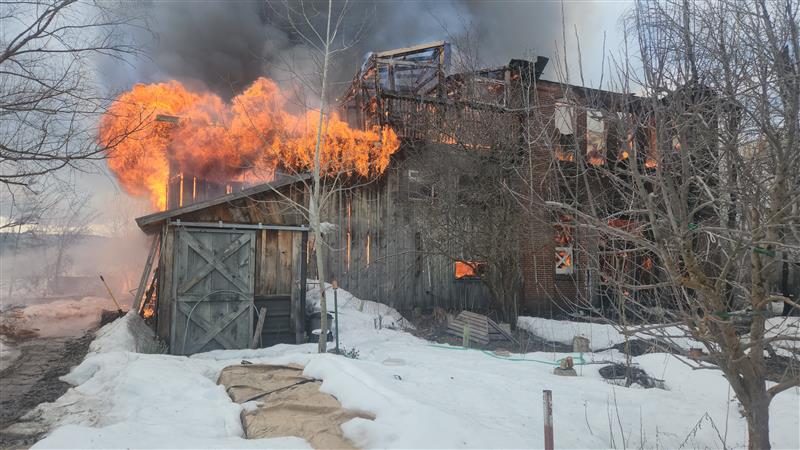
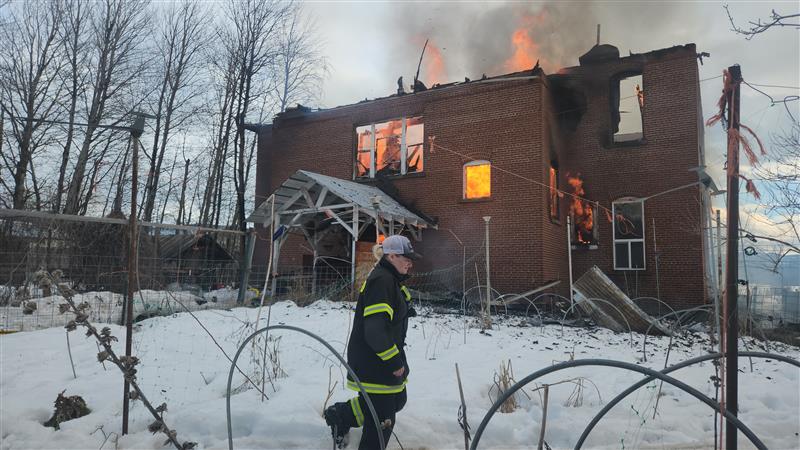
New Meadows, Idaho — On March 24, Fire Service Training (FST) Program Director Brad Terry found himself in the right place at the right time while driving back from the Clearwater Fire Academy in Orofino. As he passed through New Meadows, he noticed smoke rising from the valley and quickly turned around after seeing a Meadows volunteer fire truck heading in the opposite direction.
“As I got closer, I could tell this was a bigger fire, likely a structure fire,” said Terry.
By the time he arrived, the two-story brick building was fully engulfed, with the roof collapsing. Terry offered assistance, helping set up water supply lines for the local responders and learned that two of the firefighters battling the blaze had just completed their training at the Clearwater Fire Academy that weekend. One of the volunteer firefighters had taken the Fire Essentials course days earlier.
“He looked at me and said, ‘Hey, weren’t you at Clearwater?’” said Terry. “I said, ‘Yeah, you were too!’ It was amazing to see someone apply what they had just learned in such a real, immediate way.”
“It’s incredible to see how the training is paying off right away,” said Terry. “These volunteers are really committed to their communities, and this training gives them the skills to respond when they’re needed most.”
Brad Terry
Terry also met a Fish and Game officer volunteering with the Meadows Valley Fire Department who had taken the same course.
“It’s incredible to see how the training is paying off right away,” said Terry. “These volunteers are really committed to their communities, and this training gives them the skills to respond when they’re needed most.”
FST offers courses ranging from basic fire essentials to advanced certifications in areas like hazardous materials and rescue operations. After completing training, firefighters can take exams to become certified in specific firefighting skills. These certifications help ensure that both volunteer and professional firefighters are prepared for emergencies.
The Clearwater Fire Academy is one of several FST events held each year, drawing hundreds of participants to gain certifications or renew existing ones. This past weekend’s academy saw 230 attendees who received hands-on training in fire suppression, rescue operations, and hazardous materials management.
“Training isn’t mandatory in Idaho, but it’s strongly recommended,” said Terry. “Having certified firefighters on the frontlines means a more effective response and can even lower insurance ratings for the community.”
The true value of the training was evident during the New Meadows fire.
“In this job, you never know when you’ll be tested,” said Terry. “Seeing these firefighters apply their skills from Clearwater to this fire shows just how important this training is.”
Brad Terry named permanent program director for Idaho Fire Service Training
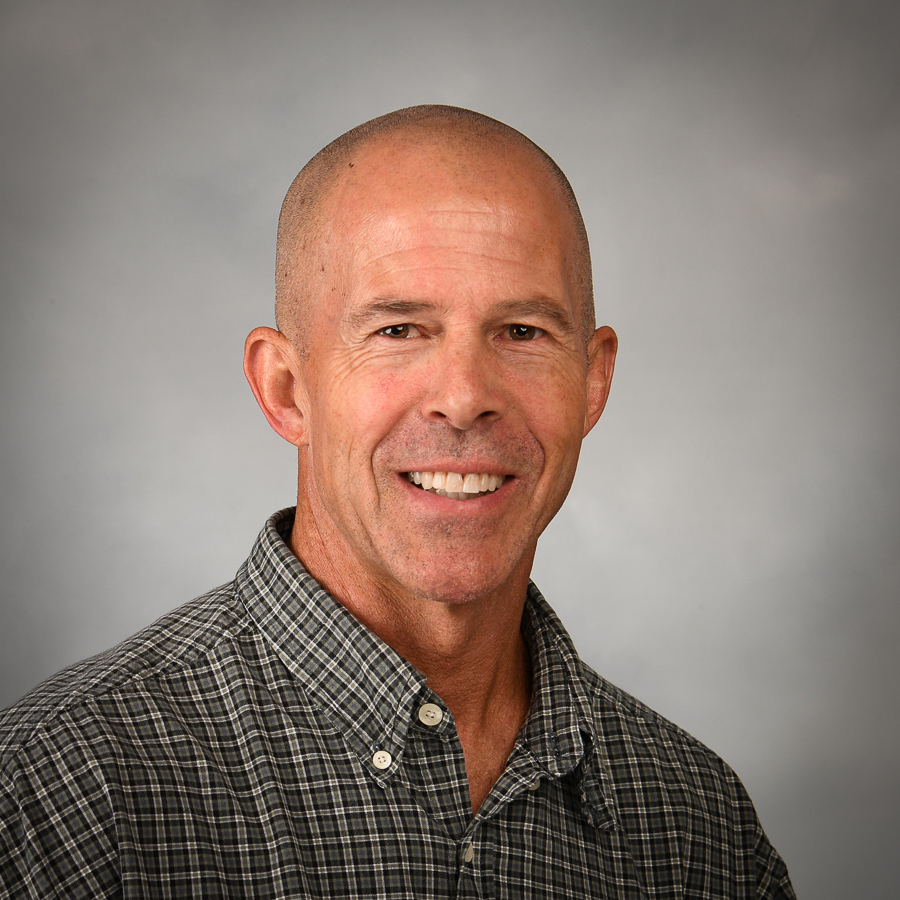
Brad Terry has been appointed permanent Program Director for Idaho’s Fire Service Training (FST), effective April 1.
Idaho Fire Service Training, housed within the Idaho Division of Career Technical Education (IDCTE), plays a crucial role in Idaho’s fire service community. As an accredited entity through the International Fire Service Accreditation Congress, Idaho FST offers access to industry credentialing, maintains transcripts, and provides training.
Terry brings extensive experience to his new role, including four years in the Marines and 17 years in the Air Force, including two deployments to Iraq and Afghanistan. Terry also served more than 26 years with the Nampa Fire Department. He progressed through various positions within the department, including firefighter, engineer, captain, shift training officer, and battalion chief, finally retiring in 2021.
“Since August, Brad has been serving in an interim role leading the work of Idaho’s Fire Service Training,” said Clay Long, IDCTE’s state administrator. “I’m excited to have Brad take the helm in the permanent role to continue building and moving FST forward.”
Terry is honored to serve in this new capacity.
“It’s a privilege to continue serving the firefighting community and contributing to the invaluable work of Idaho FST,” said Terry.
IDCTE releases its 2023 Annual Report
The Idaho Division of Career Technical Education (IDCTE) has released its 2023 Annual Report
For the third year in a row, the report highlights successful programs in each region, calling attention to the initiatives and collaborative efforts that help ensure students are prepared to meet workforce demands. This year’s report features:
- Bonners Ferry High School’s Cabinetmaking and Bench Carpentry program.
- Lewiston High School’s Digital Media Production program.
- Swan Falls High School’s Diesel Technology program.
- North Idaho College’s Center for New Directions.
- College of Southern Idaho’s Commercial Driver’s License program.
- Idaho State University College of Technology’s Automotive Technology program.
- Idaho Falls School District No. 91 Career Technical Education Center’s Cybersecurity program.
“Our programs benefitted from the financial support of Governor Little and the legislature, and this year’s report is a powerful testament to the return on those investments,” said Dr. Clay Long, IDCTE’s state administrator.
The report documents some of IDCTE’s major accomplishments, including:
- Finalizing a request or proposal for a new data and reporting system.
- Supporting almost 300 new CTE educators.
- Experiencing exponential program growth.
- Investing in program expansion and modernization.
- Reassessing and aligning program standards.
- Increasing the number of Workforce Readiness and CTE Diplomas issued.
The 2023 Annual Report also highlights IDCTE’s Exemplary Program Awards. Read the full 2023 Annual Report online.
Automotive technology program bridges skills with industry demands
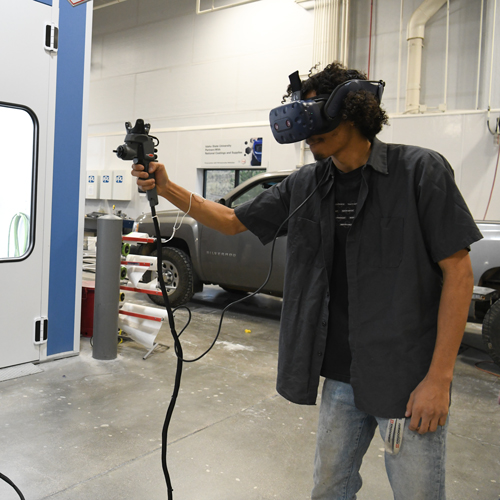
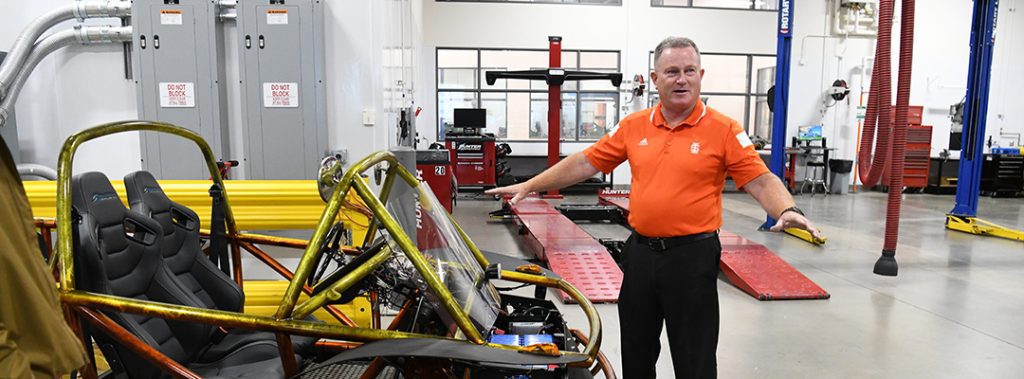
Seeing former students return and witnessing their career growth in the industry after five or 10 years, is truly satisfying.
Brock gunter
Growing up on a farm in Marsh Valley, Brock Gunter’s curiosity drove him to tinker endlessly.
“I took auto all four years of high school,” said Gunter. “My favorite classes were where I got to see how things worked and tear them apart.”
That passion led Gunter to the College of Southern Idaho, where he earned a certificate in diesel technology. For 13 years, he worked in the service department of a Pocatello car dealership. Though he loved his work, a personal connection with Dave Treasure, chair of Idaho State University College of Technology’s transportation department, changed the course of his career.
“They needed an automotive technology instructor, and it felt like a perfect fit,” said Gunter. “Eighteen years later, it still is.”
Gunter’s curriculum, accredited by Automotive Service Excellence (ASE), primes students in engine repair, transmissions, steering, brakes, electrical systems, HVAC, and engine performance. He attributes the program’s success and high job placement rates to plenty of hands-on learning opportunities.
“The last eight weeks of the program, our students focus on what we call live work,” said Gunter. “Some of them work on the cars we have in the shop, and others work in a shop in the community.”
Gunter leans on connections with his technical advisory committee (TAC) to help students find internships and job opportunities. Comprised of representatives from local dealerships and independent shop owners, their insights help Gunter align his teaching methods with industry demands, leading to program enhancements and equipment upgrades. Recent feedback from the committee led Gunter to request new diagnostic equipment and electrical trainers using funds from Governor Little’s Leading Idaho initiative. But it’s not just the hands-on learning opportunities, state-of-the-art equipment, and active and engaged TAC that draw students to Gunter’s program.
“ISU is kind of unique in that, in addition to technical certificates, students can earn an associate’s degree in two years by completing general education requirements,” explained Gunter. “There’s also a path to a four-year Bachelor of Science degree, which draws a lot of students from out-of-state.”
Gunter’s program also attracts interest from area high schools by offering dual credit.
“So I have about 10 students from all three high schools come up here for the last two hours of the day,” said Gunter. “They get the whole first semester done while still in high school, saving them time and money if they choose to continue the program after graduation.”
Regardless of where they come from or where they end up, Gunter takes immense pride in witnessing his students succeed. “Seeing former students return and witnessing their career growth in the industry after five or 10 years, is truly satisfying,” said Gunter.