 Official Government Website
Cosmetology class turns heads in Dayton
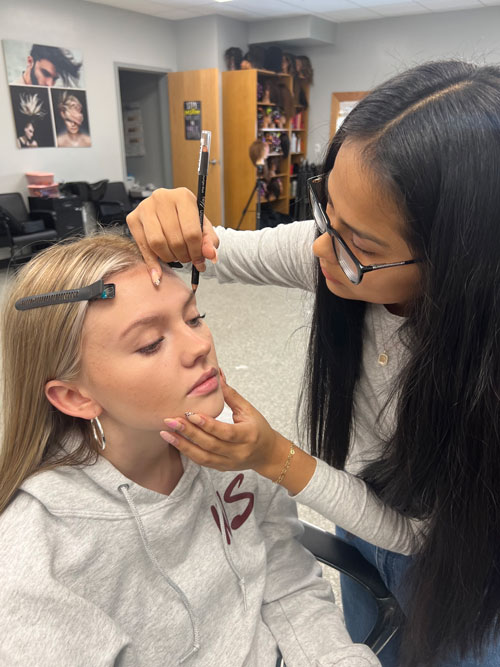
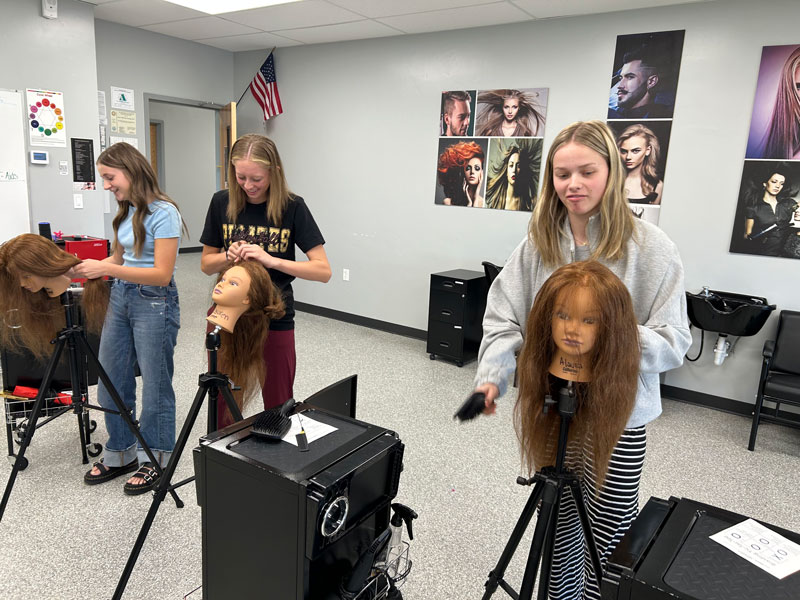
When Lisa Barnard launched the cosmetology program at West Side High School five years ago, she wasn’t just adding another elective. She was building a career pathway that blends technical skill, creativity and real-world experience.
Barnard brings more than 27 years in the industry—20 as a salon owner—and a family heritage steeped in hairdressing.
“I come from a family of hairdressers,” Barnard said. “It’s in my blood.”
The idea to start the program came when local CTE leaders approached her about teaching. At the time, Barnard was struggling with chemical allergies that made salon work difficult. Teaching, she realized, was a way to stay connected to the field while helping students.
“It was a good opportunity to try something new but still do what I love,” she said.
Demand was immediate. A regional survey of students ranked cosmetology among the most requested programs, and today Barnard has 36 students enrolled across two classes. Interest is so high that she turns away applicants each year.
The program is structured much like a postsecondary cosmetology school. Students attend class daily for two hours and spend full Fridays in a student-run salon that serves the community.
“My students go into school already knowing more than a lot of others, they feel overprepared, which is exactly what I want.”
Lisa Barnard
“They’re so scared the first time they work on a live person,” Barnard said with a laugh. “But within a month, Friday salon day is their favorite.”
The curriculum covers haircutting and coloring, manicures, pedicures, facials and nail enhancements. Students begin with mannequin work before moving into client services. By graduation, they’ve logged about 800 hours toward the 1,600 required for state licensure.
“They’ve learned everything there is to learn,” Barnard said. “They just need more hours and hands-on practice.”
The program’s value is undeniable. The average tuition for cosmetology school ranges from $20,000 to $25,000. By completing half their training in high school, Barnard’s students save an average of $7,000 to $10,000. They also enter postsecondary programs ahead of their peers.
“My students go into school already knowing more than a lot of others,” Barnard said. “They feel overprepared, which is exactly what I want.”
Barnard’s graduates often find work quickly. She currently employs three former students in her own salon, and many others work in the region. Salaries vary, but Barnard said stylists who put in the time to build a clientele can double their starting wages within a few years.
The program also builds confidence. Barnard recalled one student who struggled academically and needed extra help with tests. By the end of the program, that same student was excelling.
“As soon as she realized she had a talent for it, everything fell into place,” Barnard said. “She ended up placing at state SkillsUSA and is now thriving in a salon.”
Looking ahead, Barnard hopes to expand offerings with an introductory course and possibly summer sessions to help students log more hours. For now, she’s proud of the foundation she’s built.
“It’s an amazing opportunity for these kids,” she said. “They love it enough that they don’t mind putting in the work—and that’s what makes it all worth it.”