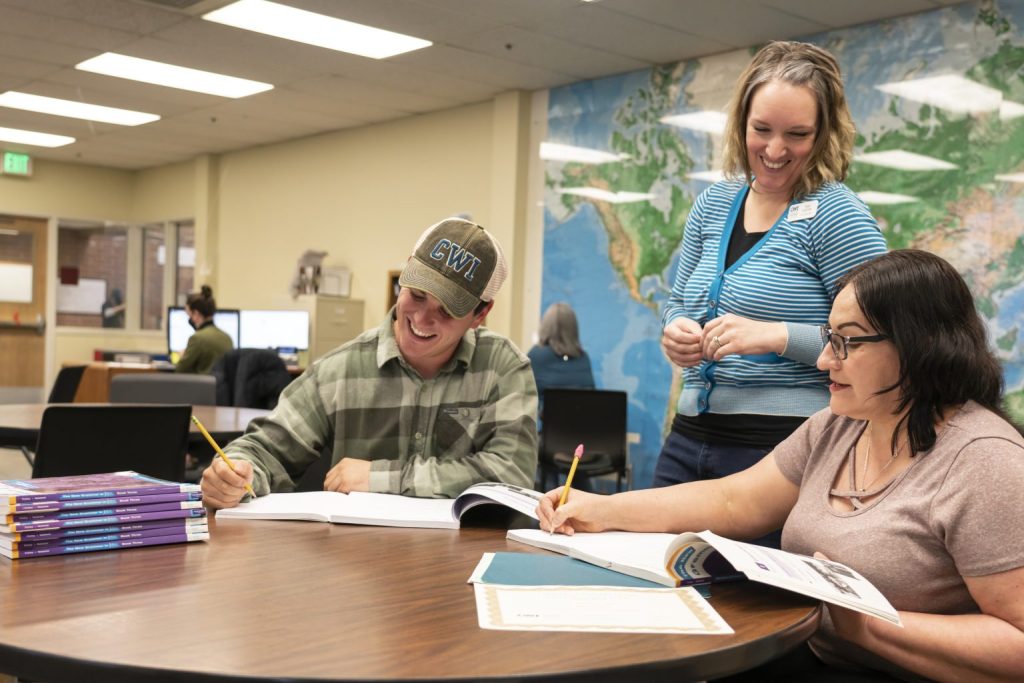
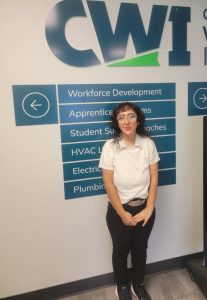
“Ali has shown determination and persistence by showing up to Reading and Language classes as well as studying in the Community Learning Center nearly every weekday. She isn’t afraid to ask questions and seek answers, which has helped her to find the right resources to help her improve her math and language skills,” said Porter. “I was thrilled when she came to me and asked to try the more challenging class, showing me that she has gained confidence in herself and in her reading. She has been a great example to the students around her by showing them that you can succeed through hard work.”
When the workload felt overwhelming, Horner leaned on her mother, mother-in-law and boyfriend. Her mother, she said, was especially instrumental.
“My mom has always had a hard life, and she didn’t want that life for me. She encouraged me, bought my GED books and even paid for my rides,” said Horner. “If it wasn’t for her, I don’t think I would have kept going.”
Her boyfriend also played a big role. “He woke up extremely early every day to take me to the bus or drop me off when I didn’t have a ride. He’s my better half,” said Horner.
Horner also found family in the Community Learning Center. Staff members like Shani Cummins, Vicki Flowers, and David Wheeler made a huge impact on her journey. “Most of the staff at the CLC became a second family to me,” she said.
Along the way, Horner also discovered tools that worked for her, like Khan Academy’s online lessons. She also relied on music to stay calm and focused during class. “International music and learning new languages helps a lot with intellectual and cognitive disabilities; it keeps me focused and helps me not have my ticks in class,” Horner explained. She also finds inspiration in artists like Skitz Kraven, a horrorcore musician who speaks openly about mental health struggles, including paranoid schizophrenia, OCD, and bipolar depression.
 Official Government Website