Healthcare Careers
Partnership builds CNA pathway connecting students to healthcare careers
CNA Pathway
 Official Government Website
Healthcare
Program Manager at the College of Southern Idaho’s Medical Assisting Program
I’m constantly reaching out to employers, asking how we can work together,” said Mahannah. “We hold lunch-and-learns, attend health fairs, and ensure our curriculum aligns with industry needs.
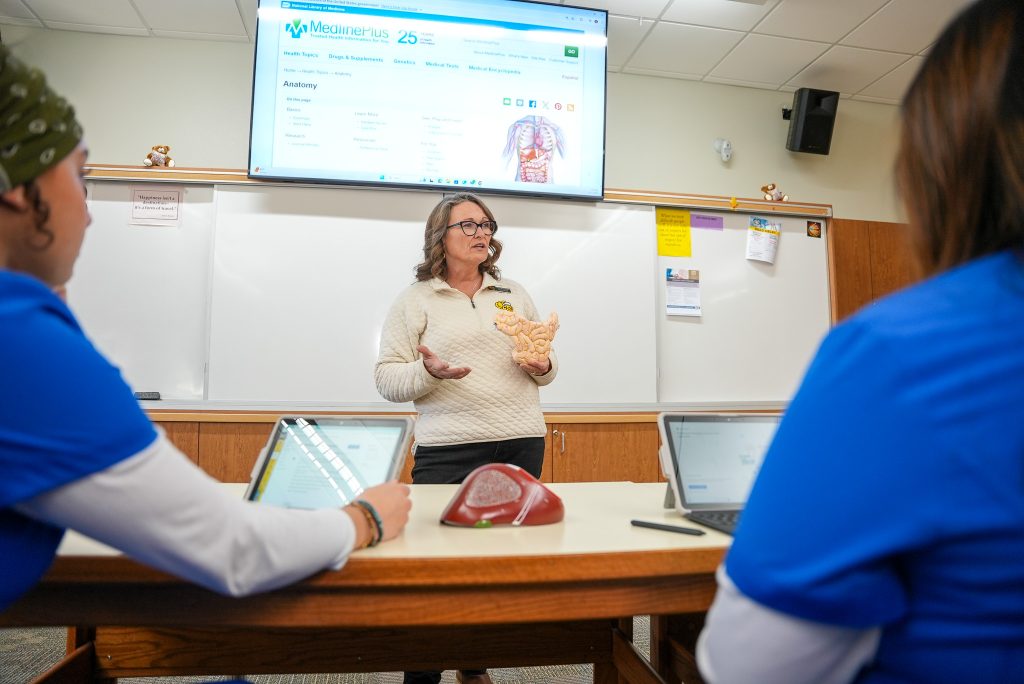
When Kara Mahannah stepped into the role of program manager at the College of Southern Idaho’s Medical Assisting Program in 2009, she knew she was inheriting a legacy. Now, as the program prepares to admit its 35th cohort, Mahannah continues to drive innovation and inspire the next generation of healthcare professionals.
Medical assistants play a crucial role in outpatient healthcare settings. They are trained to perform both administrative and clinical tasks—everything from scheduling appointments and managing patient records to taking vital signs, assisting with exams, drawing blood and educating patients.
“We train students for a wide range of roles in clinics—from front desk operations to assisting with procedures in family practice, pediatrics, urgent care and specialty settings,” said Mahannah.
Her own journey in healthcare began with a nursing degree from CSI in 1996. “I graduated from the practical nursing program at CSI in 1996,” said Mahannah. “I worked in a hospital and outpatient clinics before joining CSI, and I’ve always loved being part of a team that takes care of others.”
Her connection to CSI began even before her employment, coordinating student clinical rotations at her former clinic. That hands-on experience, combined with her nursing background, positioned her perfectly to lead the state’s longest-standing Commission on Accreditation of Allied Health Education Programs-accredited medical assisting program.
Mahannah has overseen major changes, including adapting the program structure to better serve non-traditional students.
“We adjusted the hours from five days a week to two and a half,” said Mahannah. “That flexibility really helps students who are balancing school with work and family.”
She’s also pushed for technological advancements, replacing heavy textbooks with digital resources and integrating electronic health record systems into the curriculum.
“Everything is accessible from day one,” she said. “And students get real-world practice using tools they’ll encounter on the job.”
The program’s five-year job placement rate of nearly 88 percent and a national credentialing exam pass rate of 91.3 percent speak to its quality. Mahannah credits much of that success to her technical advisory committee, a diverse group of over 30 stakeholders from the community, clinics, education and CSI administration.
CNA Pathway
Nursing